
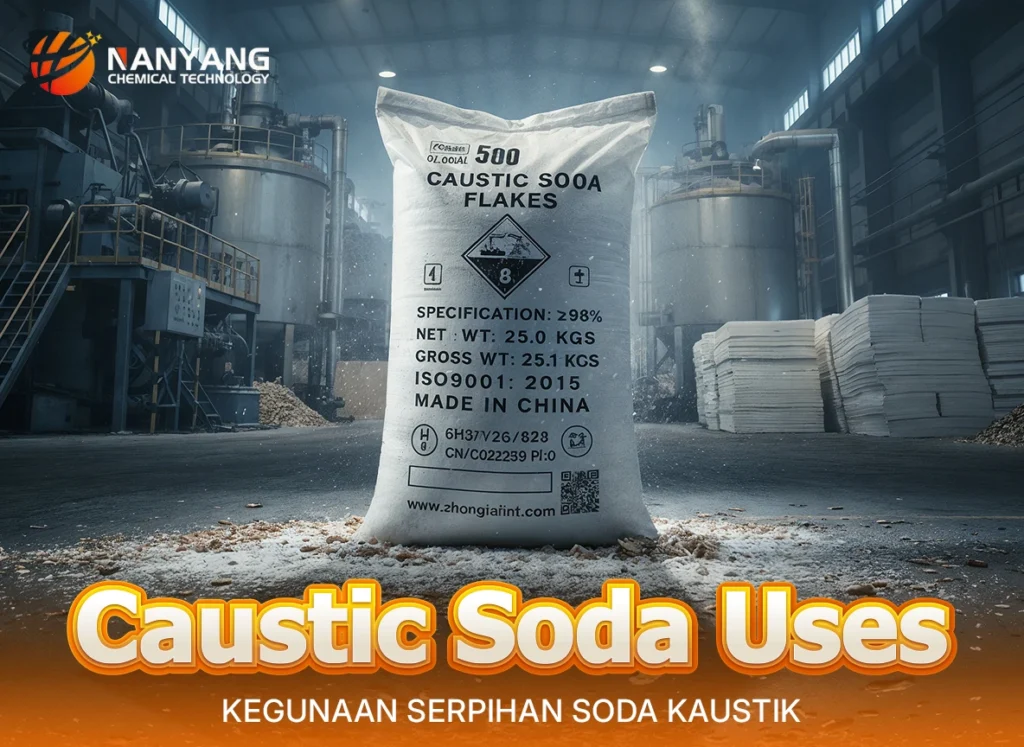
In the vibrant, fast-paced landscape of Malaysian industry, where efficiency and product quality dictate market success, a single, highly versatile chemical compound stands as a fundamental, yet often unsung, building block: Caustic Soda. Chemically known as Sodium Hydroxide (NaOH), or simply lye, this powerful alkali is far more than just a raw material; it is a critical process enabler that underpins several of the nation’s key economic pillars.
The demand for high-quality caustic soda in Malaysia is directly tied to its extensive and indispensable caustic soda uses. For forward-thinking professionals—be it the Plant Engineer managing uptime, the Purchasing Manager safeguarding the supply chain, or the R&D Specialist driving innovation—understanding the breadth of its applications is not just academic; it is a strategic necessity.
Caustic soda is integral to some of Malaysia’s most vital sectors. Its strong alkaline nature and highly reactive properties make it essential for neutralizing acids, saponifying fats (turning them into soap), and breaking down complex organic compounds.
- Palm Oil Refining: As one of the world’s largest producers, Malaysia’s palm oil industry relies heavily on NaOH for the crucial alkali refining (neutralization) process. It removes free fatty acids (FFAs) from crude palm oil (CPO), transforming it into the refined, edible grade necessary for global consumption. Without consistent, high-purity caustic soda, this multi-billion-ringgit industry cannot meet international quality standards.
- Water Treatment: From municipal drinking water facilities to complex industrial effluent treatment systems (IETS), caustic soda is the chemical of choice for pH regulation. It raises the pH of acidic wastewater, ensuring environmental compliance with local Department of Environment (DOE) regulations and preventing corrosion in expensive machinery.
- Pulp & Paper: This chemical is vital in the Kraft process, where it helps break down wood fibers to extract lignin and cellulose. Furthermore, in an age of increased sustainability focus, caustic soda is a key component in de-inking recycled paper, promoting circular economy practices within the local paper manufacturing sector.
- Manufacturing and Textiles: It is used in the mercerization of cotton in the textile industry, dramatically enhancing the fabric’s luster, strength, and dye absorption. It is also a core ingredient in the production of countless soaps, detergents, and industrial cleaning agents, keeping Malaysia’s manufacturing facilities sanitary and operational.
Given this widespread and critical reliance, the purity, form (flakes, pearls, or liquid), and reliability of supply are not merely procurement metrics—they are indicators of operational risk. This is where Nanyang Chemical differentiates itself. We recognize that for Malaysian businesses, process integrity is paramount. Sourcing from a partner who guarantees high-purity, consistent-grade caustic soda is the first step toward safeguarding your production line and product quality. We offer materials that meet stringent specifications, ensuring your operations—from the smallest IETS to the largest palm oil refinery—run without interruption.
Understanding the deep and varied caustic soda uses in Malaysia is the foundation of smart procurement. The next section will explore the technical details of these applications, illustrating precisely where a reliable supply chain becomes a competitive advantage.
- Core Industrial Applications in Malaysia
- The Criticality of Purity and Supply Chain
- Why Nanyang Chemical is Your Strategic Partner in Malaysia
- Conclusion
- Frequently Asked Questions on Caustic Soda Uses and Sourcing
Core Industrial Applications in Malaysia
The remarkable versatility and potent alkalinity of Sodium Hydroxide (NaOH) position it as a lynchpin chemical across Malaysia’s industrial complex. Far beyond a simple commodity, the myriad of caustic soda uses directly impacts product quality, operational efficiency, and environmental compliance for the nation’s key manufacturing and resource sectors.
1. The Malaysian Palm Oil Refining Sector: Neutralization is Key
Malaysia is a global leader in palm oil production, and this industry represents one of the single largest consumers of caustic soda nationwide. The core application is the refining process of Crude Palm Oil (CPO).
- The Process: CPO contains Free Fatty Acids (FFAs), which lower the oil’s quality and shelf life. The industry standard method for removing these is alkali refining, or neutralization.
- The Role of Caustic Soda: Concentrated caustic soda solution is precisely dosed into the heated CPO. The NaOH reacts with the FFAs to form soapstock (a sodium salt of the fatty acid) in a process called saponification. This soapstock is heavier than the refined oil and is easily separated via centrifugation.
FFA + NaOH -> Soapstock + Water - Technical Requirement: This process demands a high-purity, consistent-concentration caustic soda (often 45%- 50% liquid solution). Impurities can interfere with the saponification reaction, leading to inefficient separation, higher oil losses into the soapstock, and a poorer final Refined, Bleached, and Deodorized (RBD) oil quality. For a market focused on export standards, sourcing the purest NaOH is paramount.
2. Water and Wastewater Treatment (IETS Compliance)
Environmental compliance is non-negotiable for Malaysian manufacturing, and caustic soda is the most effective chemical for ensuring acidic industrial effluents meet the strict discharge standards set by the Department of Environment (DOE).
- pH Regulation (Neutralization): Most industrial processes, from chemical synthesis to metal finishing, generate acidic wastewater. Caustic soda is used to raise the pH of the water to the required neutral range (typically pH 6 to 9) before it can be safely released or further treated.
- Heavy Metal Precipitation: Achieving the target pH often causes dissolved heavy metals (like copper, zinc, and nickel) to precipitate as insoluble hydroxides, which can then be easily filtered out.
- Boiler Feed Water Treatment: In power generation and manufacturing plants, NaOH is introduced to boiler feed water to maintain a high alkaline pH (typically above pH 10). This controlled alkalinity creates a protective oxide layer on the boiler pipes, which prevents corrosion and scale buildup, thereby extending the life of multi-million ringgit equipment.
- Form Advantage: Liquid caustic soda (Lye) is often preferred here due to the ease and precision of dosing via metering pumps in a typical Industrial Effluent Treatment System (IETS).
3. Pulp and Paper Manufacturing: Fiber Separation and Brightness
The Malaysian pulp and paper industry relies on caustic soda for both primary pulp production and increasingly, for sustainable recycling efforts.
- Kraft Pulping Process (Delignification): NaOH is a key component of the “white liquor” used to cook wood chips. Its strong alkalinity dissolves lignin—the glue that binds wood fibers—leaving behind the pure cellulose fibers necessary for paper production. This is known as delignification.
- Bleaching: Post-pulping, residual lignin often leaves a brownish tint. Caustic soda is utilized in various bleaching stages (e.g., in combination with chlorine dioxide) to create the necessary high-alkaline environment, which enhances the effectiveness of the bleaching agents, achieving the required paper whiteness and brightness for printing and high-grade packaging materials.
- Recycling (De-inking): In paper recycling mills, NaOH is essential for the de-inking process. It helps swell the paper fibers and effectively saponifies the oils and dispersing agents in the printing ink, allowing the ink particles to separate from the cellulose fibers and float away. This application directly supports Malaysia’s circular economy goals.
4. Textile Processing: Mercerization
In Malaysia’s textile hubs, particularly for high-quality cotton products, NaOH is critical for a process that fundamentally alters the fiber structure.
- Mercerization: This process involves treating cotton yarn or fabric with a concentrated NaOH solution (around 20%). The chemical causes the cotton fibers to swell and untwist, leading to a permanent change in structure.
- Benefits: This transformation results in:
- Increased Luster: Giving the fabric a silky, higher-end appearance.
- Enhanced Tensile Strength: Making the product more durable.
- Improved Dye Affinity: Allowing the fabric to absorb and retain dye colors more deeply and uniformly, reducing dye usage and increasing color richness.
5. Other Critical Industrial Applications
The list of caustic soda uses extends further into various manufacturing sub-sectors:
- Soaps and Detergents: It is a core reactant in the saponification process for making hard bar soaps and is used to adjust the pH of liquid detergents and cleaning formulations.
- Alumina Production (Bayer Process): While not Malaysia’s largest industry, NaOH is central to extracting aluminum oxide (Al2O3) from bauxite ore. The caustic solution dissolves the aluminum-containing minerals, leaving behind impurities.
- Petroleum Refining: In the Oil & Gas sector, NaOH is used to “scrub” petroleum fractions, removing acidic contaminants such as Hydrogen Sulfide (H2S) and Carbon Dioxide (CO2), which are highly corrosive and reduce fuel quality.
For every one of these critical applications, the quality of the caustic soda directly correlates with the quality and profitability of the end product. Using inconsistent or impure chemical means risking process failures in palm oil refining, non-compliance in water treatment, or poor dye uptake in textiles.
Nanyang Chemical is committed to supplying the Malaysian market with high-purity caustic soda—whether in easy-to-handle flakes for smaller-scale use or certified 50% liquid solution for large-volume industrial tanks. We ensure our product minimizes impurities, offering the predictability and performance that Malaysian Plant Engineers and Purchasing Managers demand to keep their complex operations running efficiently and competitively.
The next section will detail how these specific uses translate into critical procurement decisions and why Nanyang Chemical is the strategic supplier to meet those exacting requirements.
The Criticality of Purity and Supply Chain
While the vast spectrum of caustic soda uses establishes its importance in Malaysian industry, the successful execution of those applications hinges on two non-negotiable factors: the purity of the chemical and the reliability of the supply chain. For Purchasing Managers and Technical Directors, overlooking either of these elements transforms a necessary procurement into a substantial operational risk.
A. The Cost of Impurities: Why High Purity is a Mandate
In industrial processes, especially those involving delicate chemical reactions or strict quality control, seemingly minor impurities in caustic soda can have disproportionately large, negative consequences.
1. Impact on Product Quality and Yield
- Palm Oil Refining: As discussed, NaOH is used to neutralize Free Fatty Acids (FFAs). If the caustic soda contains high levels of heavy metal contaminants (e.g., iron), these metals can act as pro-oxidants, accelerating the degradation and rancidity of the refined palm oil. This directly compromises the oil’s stability and shelf life, leading to failed quality control checks and rejection in export markets. A pure product ensures maximal FFA removal with minimal impact on the final oil quality.
- Alumina and Chemical Synthesis: In reactions requiring precise stoichiometry, impurities consume the reactant (NaOH) unnecessarily, leading to lower yields of the desired end product. Furthermore, certain contaminants can poison expensive catalysts used downstream, necessitating costly replacements and process downtime.
- Textile Mercerization: Impurities can react unevenly with the cotton fibers, resulting in streaks, uneven dyeing, or a lack of uniformity in luster, severely reducing the value of the finished textile product.
2. Equipment Damage and Maintenance Costs
- Corrosion and Scaling: Lower-grade caustic soda often carries higher concentrations of trace salts (like chlorides and sulfates) or insoluble residues. When introduced into process lines, especially those involving heat exchangers, boilers, and pipes, these impurities accelerate corrosion. Over time, they lead to the formation of scale (hard mineral deposits) that clog pipes, reduce heat transfer efficiency, and necessitate expensive, unscheduled shutdowns for maintenance and descaling. The financial impact of equipment failure far outweighs any marginal saving made on a low-cost, low-grade chemical.
- Pump and Dosing System Failure: In liquid dosing systems (common in water treatment and continuous manufacturing), insoluble impurities can clog fine filters and precise metering pumps. This causes irregular dosing, impacting the pH stability of the process and potentially leading to system failure and operational stoppage.
B. Supply Chain Reliability: The Malaysian Context
The ability to consistently and safely deliver the right form and quantity of caustic soda is as critical as its purity, especially in a supply chain as complex as Malaysia’s.
1. Form Factor and Operational Scale
The various caustic soda uses require different physical forms of NaOH, necessitating a supplier that offers flexible options:
| Form Factor | Typical Concentration | Preferred Applications in Malaysia | Logistical Advantage |
| 50% Liquid Solution (Lye) | 50% NaOH in water | Water Treatment (IETS), Large-scale Palm Oil Refining, Bulk Chemical Manufacture. | Ideal for high-volume, automated dosing systems; minimizes handling risk. |
| Flakes/Pearls | 99% min NaOH | Small/Mid-scale Manufacturing, Soap Making, Laboratory Use, Remote Sites. | Easier to store and transport to areas without bulk tank infrastructure; no freezing risk. |
A robust supplier must manage the logistics for both. Liquid NaOH requires specialized, heat-traced tankers and bulk storage, while flakes demand moisture-proof packaging and precise inventory management to prevent caking and degradation.
2. Logistical Challenges and Safety Compliance
Malaysia’s infrastructure, while developed, presents regional logistical hurdles. Delays in delivery—due to customs clearance, inadequate vehicle fleet, or poor route planning—can be devastating.
- Operational Stoppage: For continuous operations like a 24/7 paper mill or a palm oil refinery, a delay in caustic soda delivery of even a few hours can lead to a complete line stoppage, incurring massive losses in labor, output, and missed contract deadlines.
- Safety and Handling: Caustic soda is a corrosive, Class 8 dangerous goods product. Reliable supply includes rigorous adherence to DG (Dangerous Goods) handling protocols—from the loading bay to the customer’s facility. This means certified drivers, compliant packaging, and accurate Material Safety Data Sheets (MSDS) and guidance, which reduces the buyer’s risk of accident or non-compliance with local safety regulations.
Recognizing this dual criticality, Nanyang Chemical positions itself not merely as a vendor, but as a strategic partner to Malaysian industry. Our focus is on providing guaranteed NaOH purity that meets or exceeds industry standards, eliminating the risk of product contamination and equipment damage. Furthermore, our established logistical network across major industrial zones (Selangor, Johor, Penang) ensures we can reliably manage the complexities of liquid bulk and flaked product distribution, securing the uninterrupted operation of your facility.
The effective execution of the various caustic soda uses in your business depends entirely on the chemical you receive and the supplier who delivers it. Choosing a reliable, quality-focused supplier is the simplest, most effective way to mitigate operational risk and ensure product excellence in the highly competitive Malaysian market.
The final section will detail how Nanyang Chemical translates these commitments into a tangible competitive advantage for our clients.
Why Nanyang Chemical is Your Strategic Partner in Malaysia
For the sophisticated Malaysian industrial buyer—the Plant Engineer who cannot tolerate downtime, the Quality Manager who demands product conformity, and the Purchasing Director who requires cost-effective supply security—the choice of a caustic soda supplier is a strategic decision. It is not about the cheapest commodity; it is about securing a partner who understands the profound and critical role of caustic soda uses within your specific operations. Nanyang Chemical is that strategic partner. We don’t just supply chemicals; we supply the foundation for process integrity and uninterrupted profitability in the Malaysian manufacturing and commodities sectors.
A. Uncompromising Quality: The Nanyang Purity Standard
Every application within the wide range of caustic soda uses — from the neutralization of Free Fatty Acids in palm oil to the pH adjustment of critical boiler feed water—demands a consistent, high-purity product. Impurities are latent liabilities that cost more in the long run through corrosion, failed batches, and reduced yields.
1. Guaranteed Grade Consistency
Nanyang Chemical guarantees a minimum purity of 99% for our Caustic Soda Flakes and Pearls, and a tightly controlled, certified concentration for our 50% Liquid Lye Solution. This strict adherence to purity standards ensures:
- Optimal Reaction Efficiency: Maximizing the effectiveness of the NaOH in key reactions like saponification or delignification, leading to better product yield.
- Equipment Protection: By minimizing heavy metal and chloride contamination, we significantly reduce the risk of accelerated corrosion and scale formation in your heat exchangers, pipes, and dosing equipment, saving you significant capital expenditure on maintenance.
- Compliance Certainty: For sectors like food-grade processing and water treatment, our certified quality assures easy adherence to stringent local and international regulatory standards.
2. Adherence to Global Quality Benchmarks
Our operations are governed by international quality management systems, including ISO 9001 certification. This is not a mere certification; it is a promise of systematic quality control over every stage: sourcing, processing, packaging, and delivery. When you choose Nanyang, you are selecting a product that is benchmarked against the world’s best, ensuring your process inputs are globally competitive.
B. Local Expertise, Robust National Supply Chain
Understanding the vast caustic soda uses in Malaysia also means understanding the geographical and logistical demands of the country’s diverse industrial landscape, from the specialized ports of Johor to the industrial parks of Selangor and the plantations of East Malaysia.
1. Strategic Distribution Network
Nanyang Chemical has invested heavily in a robust, multi-modal distribution network that overcomes Malaysia’s unique logistical challenges.
- Bulk Liquid Delivery: We operate a fleet of specialized, certified tank trucks equipped for the safe and temperature-controlled transport of 50% liquid NaOH. This ensures stable delivery to large-volume users (e.g., refineries and water treatment plants) across the Peninsular and East Malaysia.
- Flexible Flake/Pearl Logistics: For our 99% solid product, we offer flexible packaging options—from 25kg bags to 1,000kg Jumbo Bags—that are designed to be weather-resistant and easily handled by standard warehousing equipment, facilitating delivery to smaller-scale users or remote sites.
2. Speed and Security of Supply
For a chemical that is critical to continuous operations, stock-out is an existential threat. Nanyang Chemical maintains strategic reserve inventory within Malaysia, mitigating risks associated with global shipping volatility and port congestion. This local stocking capability ensures Just-In-Time (JIT) delivery, giving your Purchasing team the confidence that essential production inputs are always available when needed. Our deep local knowledge helps us navigate customs, road networks, and regional permits swiftly, reducing the lead time that often frustrates buyers relying on overseas suppliers.
C. Safety and Technical Partnership
The final, and perhaps most vital, pillar of our strategic partnership is our commitment to chemical safety and technical support, essential factors given the corrosive nature of NaOH.
1. Unwavering Safety Compliance
We operate under stringent DG (Dangerous Goods) handling protocols that align with Malaysian Fire and Rescue Department (BOMBA) and DOE guidelines.
- Certified Packaging: All packaging is chemically inert, sealed, and clearly labeled with hazard warnings.
- Trained Personnel: Our logistics and handling teams are regularly trained in safe handling, emergency response, and proper off-loading procedures, minimizing risk at your facility gate.
- Comprehensive Documentation: We provide current and complete Material Safety Data Sheets (MSDS) and Certificates of Analysis (CoA) with every shipment, ensuring your Health, Safety, and Environment (HSE) team has all necessary documentation for internal compliance.
2. Value-Added Technical Support
Our relationship extends beyond the transaction. Our technical team possesses deep expertise in the principal caustic soda uses prevalent in Malaysia. We offer:
- Dosing Consultation: Guidance on optimal concentration and dosing rates for specific applications (e.g., pH correction curves, saponification ratios).
- Storage Guidance: Recommendations on safe, compliant bulk storage solutions tailored to Malaysian climate and regulatory requirements.
- Troubleshooting: Rapid response support to help identify and resolve process issues that may be linked to chemical input, ensuring faster problem resolution and lower operational frustration.
Choosing Nanyang Chemical means transforming a commodity purchase into a strategic competitive advantage. It means eliminating risks associated with poor purity and supply delays, allowing your operations to focus entirely on efficiency, quality, and growth. Partner with Nanyang Chemical—the trusted supplier committed to excellence in every drop and flake we deliver to the Malaysian market.
Conclusion
The analysis of the diverse and critical caustic soda uses across key Malaysian sectors—from high-volume palm oil refining and essential water treatment to specialized textile and paper production—underscores a fundamental truth: Sodium Hydroxide is not a simple purchase; it is a vital investment in process continuity and end-product quality. The sheer scale and necessity of this chemical mean that decisions around its procurement directly impact a company’s bottom line, regulatory compliance, and market competitiveness.
The distinction between merely buying caustic soda and sourcing it from a strategic partner lies in mitigating risk and ensuring performance. Impurities in low-grade NaOH lead to operational friction—corroded equipment, failed batches, and costly downtime—while supply chain vulnerabilities lead to dreaded production stoppages.
Nanyang Chemical is strategically positioned to eliminate these risks for Malaysian industry. Our commitment to certified 99% purity ensures optimal reaction efficiency and protects your multi-million ringgit capital assets. Our robust, localized supply network, which manages both bulk liquid and flaked product with stringent DG compliance, guarantees the reliable, Just-In-Time delivery your 24/7 operations require.
In the dynamic Malaysian market, where operational efficiency is the key to maintaining a competitive edge, choosing Nanyang Chemical means securing more than just a chemical—it means securing your operations’ success.
Ready to elevate your operational security and product quality? Contact Nanyang Chemical today to discuss your specific caustic soda uses requirements and secure a partnership that guarantees purity, reliability, and technical excellence.