
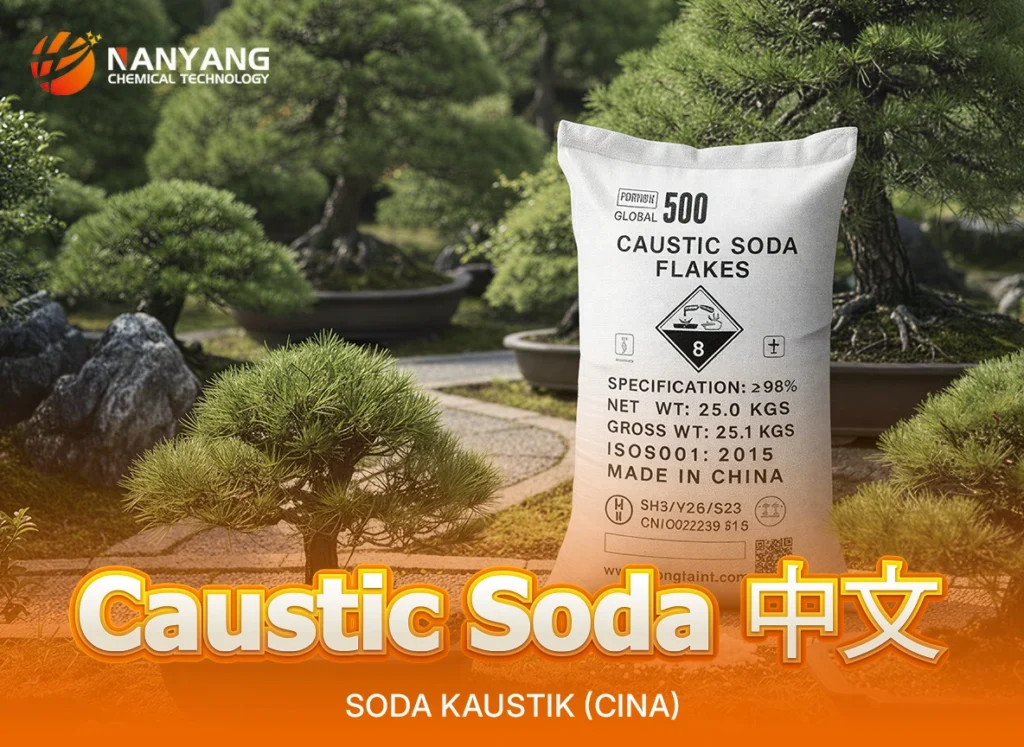
The single most critical foundation stone of chemical processing worldwide is a deceptively simple inorganic compound: Sodium Hydroxide (NaOH). More commonly known across global industrial sectors as Caustic Soda or Lye, its power lies in its extreme alkalinity. This strong base possesses a profoundly high pH—typically approaching 14 in its concentrated solution form—making it exceptionally reactive and capable of driving essential transformations across a staggering range of applications, from basic sanitation to complex chemical synthesis.
For procurement and operations professionals in Malaysia, understanding this compound is non-negotiable. Recognizing the diverse nature of Malaysia’s business environment, where local and international communications are intertwined, the keyword caustic soda 中文 (pinyin: kēxìngnà zhōngwén or shāojiǎn zhōngwén) points directly to the desire for a clear, authoritative understanding of this chemical. Whether referred to by its industrial moniker, 燒鹼 (Shāojiǎn), or its formal chemical name, 氫氧化鈉 (Qīngyǎnghuànà), the substance remains the same white, odorless, crystalline solid that is a vital commodity.
Caustic soda is not merely an additive; it is a catalyst for industrial excellence that directly influences the quality and efficiency of Malaysia’s most crucial economic drivers. Its properties, such as its ability to saponify (turn fats into soap) and its role as a powerful pH adjuster, make it indispensable. For instance, in the thriving Palm Oil sector, NaOH is essential for the neutralization process that refines crude palm oil (CPO) into high-quality refined products. Similarly, in Water Treatment, it is relied upon to adjust pH levels to comply with stringent DOE (Department of Environment) standards, ensuring both environmental responsibility and operational integrity.
The performance of Caustic Soda is fundamentally tied to its purity and the reliability of its supply chain. In a corrosive and sensitive chemical environment, using low-quality, inconsistent materials introduces risks that range from machinery damage to compromised end-product quality. This is where a strategic partnership with a reliable supplier like Nanyang Chemical provides a competitive edge. We understand that whether you require high-purity Caustic Soda Flakes, Pearls, or the 50% Liquid Solution, consistency is key. By adhering to the highest global manufacturing standards (often using modern, efficient membrane cell technology), Nanyang Chemical ensures that the 燒鹼 you receive is of unwavering quality, supporting continuous, safe, and efficient operations across all your Malaysian facilities. The search for caustic soda 中文 ends here—with a supplier that speaks your technical language and meets your stringent industrial demands.
Caustic Soda’s Indispensable Role in Key Malaysian Sectors
For a nation whose economy is deeply intertwined with natural resources and advanced manufacturing, the role of a fundamental chemical like Caustic Soda (NaOH), or 燒鹼 (Shāojiǎn), cannot be overstated. The consistent, high-purity supply of this alkali is not merely a cost factor; it is a strategic element that determines the quality, efficiency, and—critically—the regulatory compliance of the largest industrial operations across Malaysia.
The search query caustic soda 中文 highlights the need for precise information within the Malaysian business context, serving the many operations that rely on Mandarin or specialized chemical terminology. Whether referred to as 氫氧化鈉 (Qīngyǎnghuànà) or the more common industrial term, its applications form the bedrock of several major local sectors.
A. Palm Oil Refining: The Heart of Malaysian Agriculture
Malaysia is one of the world’s leading producers and exporters of palm oil, and Caustic Soda is fundamental to transforming crude palm oil (CPO) into high-quality refined products (RPO). This application is arguably the most economically significant use of NaOH in the country.
- Neutralization (Alkali Refining): The core process involves using NaOH to neutralize Free Fatty Acids (FFAs) present in CPO. FFAs are undesirable as they reduce the oil’s quality and shelf-life.
- The Chemical Reaction: The caustic soda reacts with the FFAs to form soapstock (soap), a by-product that is easily separated from the neutral oil. This process is crucial for achieving the low FFA content required for cooking oils, margarines, and other food-grade derivatives. The reaction is an example of saponification :
FFA + NaOH -> Soap + Water - Purity is Paramount: The quality of the NaOH directly impacts the yield. Impurities in the caustic soda can lead to unwanted side reactions and higher oil loss. For instance, too high a concentration or inconsistent purity can lead to the saponification of valuable triglycerides, reducing the final RPO yield. Nanyang Chemical specializes in high-purity 燒鹼 to maximize yield and minimize oil loss for Malaysian palm oil refiners.
- The Chemical Reaction: The caustic soda reacts with the FFAs to form soapstock (soap), a by-product that is easily separated from the neutral oil. This process is crucial for achieving the low FFA content required for cooking oils, margarines, and other food-grade derivatives. The reaction is an example of saponification :
- Transesterification for Biodiesel: While potassium hydroxide (KOH) is also used, NaOH is often employed as a cost-effective catalyst in the production of palm oil-based biodiesel. It facilitates the reaction between the oil and an alcohol (like methanol) to produce fatty acid methyl esters (FAME), the chemical name for biodiesel.
B. Water & Wastewater Treatment: Ensuring Environmental Compliance
Maintaining water quality and adhering to the stringent discharge regulations set by the Malaysian Department of Environment (DOE) is mandatory. Industrial effluent is often acidic, which is harmful to the environment and non-compliant with legal standards. This is where NaOH provides an essential solution.
- pH Adjustment (Neutralization): Most industrial processes, from electroplating to chemical manufacturing, generate acidic wastewater. NaOH is the most economical and effective chemical for raising the pH to meet the regulatory standard.
- DOE Standards: Malaysian Environmental Quality Regulations stipulate that industrial effluent discharged into inland waters must adhere to a pH value range of 6.0 to 9.0 (Standard A) or 5.5 to 9.0 (Standard B). Precise, controlled dosing of liquid or pearl NaOH is essential to hit this narrow compliance window without overshooting.
- Heavy Metal Precipitation: Many industrial effluents contain dissolved heavy metals (like copper, zinc, and nickel). By raising the pH with NaOH, these soluble metal ions are converted into insoluble hydroxide precipitates which can then be easily filtered out in the subsequent coagulation and flocculation stages. This process is crucial for detoxification and meeting the limits for heavy metals in discharge.
- The Nanyang Chemical Solution: Due to the highly corrosive nature of NaOH, the reliability of the dosing system is key. Nanyang Chemical not only supplies high-quality 氫氧化鈉 but also provides technical expertise on safe handling, storage, and dosage control systems to ensure 100% DOE compliance for all our Malaysian partners.
C. Pulp and Paper Manufacturing: Fiber Separation and Recycling
The Malaysian pulp and paper industry heavily relies on wood fibers and recycled materials, both of which require NaOH for processing.
- Pulping (Lignin Removal): In the dominant Kraft process used in Malaysia, NaOH is the active chemical component in the white liquor used to dissolve and remove lignin—the substance that binds wood fibers together. This process, known as causticizing, liberates the cellulose fibers necessary for paper production.
- De-inking and Recycling: In the paper recycling process, 燒鹼 is used in the flotation de-inking stage. Its alkaline nature helps to detach the printing ink from the recovered paper fibers, allowing the fibers to be reused, promoting sustainability and lowering production costs.
- Mercerization (Textiles): While focused on paper, it’s worth noting its related use in the textile sector. NaOH is used to treat cotton fibers in a process called mercerization, which increases the fabric’s luster, strength, and affinity for dyes.
D. Soaps, Detergents, and Chemical Production
The versatility of NaOH makes it a prime building block in the chemical industry itself.
- Saponification for Cleaning Agents: As a strong alkali, NaOH is integral to the production of hard bar soaps, heavy-duty degreasers, and industrial cleaning solutions. It breaks down fats, oils, and grease—the very function that makes it an excellent drain cleaner—which is then harnessed in product formulation.
- Precursor for Other Chemicals: It is a vital raw material in the production of numerous other sodium salts, including sodium hypochlorite (bleach), which is widely used in sanitation across the nation.
The demand for caustic soda 中文 signifies a need for a reliable, high-specification product. Given the critical nature of these applications—from yielding quality palm oil to ensuring clean water discharge—settling for an inconsistent supplier is a threat to profitability and compliance. Nanyang Chemical guarantees the highest standard of NaOH supply, empowering Malaysian industries to achieve operational excellence and environmental stewardship.
The Nanyang Chemical Advantage : Purity, Reliability, and Safety
The sheer industrial reliance on Caustic Soda (NaOH), or 燒鹼 (Shāojiǎn), across Malaysia means that the choice of supplier transcends mere pricing; it becomes a critical decision point for operational integrity, long-term efficiency, and product quality. For sophisticated procurement teams and plant managers searching for the best-in-class supply, the keyword caustic soda 中文 often leads to the same vital question: Which supplier offers the best assurance of Purity, Reliability, and Safety?
The answer lies in partnering with a specialist like Nanyang Chemical, whose strategy is rooted in understanding the specific demands and challenging logistics of the Malaysian industrial landscape. We don’t just supply chemicals; we deliver the highest standard of chemical performance, ensuring that our NaOH acts as a robust enabler for your process, not a weak link.
A. Unwavering Commitment to Purity: The Foundation of Performance
In the world of high-volume chemical processing, minor differences in purity can lead to major differences in cost and efficiency. For applications like Palm Oil Refining or Water Treatment, low-grade caustic soda introduces contaminants that can foul equipment, accelerate corrosion, and diminish the quality of the final product.
- Harnessing Advanced Membrane Cell Technology: The manufacturing process for 氫氧化鈉 is key. Nanyang Chemical prioritizes NaOH sourced from advanced Membrane Cell Technology. This state-of-the-art method, which utilizes a selective polymer membrane to separate the anode and cathode chambers during electrolysis, yields a product significantly purer than older, less efficient diaphragm or mercury cell methods.
- The Purity Differential: Our NaOH boasts significantly lower levels of impurities, particularly heavy metals like Iron (Fe) and undesirable salts like Sodium Chloride (NaCl).
- The Customer Benefit (Minimized Fouling): For the end-user in Malaysia, this means the caustic solution introduced into the plant has fewer inert materials that can precipitate out, form scale, or cause blockages in heat exchangers and piping. This directly translates to reduced maintenance costs and extended equipment lifespan.
- Maximizing Reaction Efficiency: In processes like the neutralization of Free Fatty Acids (FFAs) in CPO, the concentration and purity directly affect the stoichiometric calculations. High-purity NaOH allows for more accurate dosing, reducing chemical overuse and ensuring optimal reaction yields. This chemical precision is vital for minimizing expensive product loss and enhancing overall operational profit margins.
B. Robust Supply Chain and Reliability: Minimizing Downtime
In Malaysia’s highly competitive industrial environment, unexpected downtime due to a delayed or compromised chemical delivery can cost millions in lost production. Reliability is not a luxury; it is the cornerstone of a successful partnership.
- Strategic Local Stockholding: Nanyang Chemical maintains strategic inventory holdings of various forms of 燒鹼 across key industrial hubs in Malaysia. This proactive approach drastically reduces lead times compared to relying solely on imported shipments. When a sudden surge in demand or an unforeseen plant requirement occurs, Nanyang has the agility to respond quickly.
- Product Form Flexibility: We understand that different plants have different handling capabilities. We supply NaOH in all necessary industrial forms:
- 50% Liquid Solution: Ideal for large-scale users with bulk storage and automated dosing systems (e.g., large water treatment plants).
- Caustic Soda Flakes and Pearls: Preferred by smaller operations or those requiring a solid form for easier, safer handling and measured batch processing. Our Caustic Soda Pearls are particularly popular for their dust-free nature, which enhances worker safety and minimizes material loss.
- Logistical Expertise: Handling bulk NaOH, whether as a corrosive liquid or a solid, requires specialized transport and handling protocols. Nanyang Chemical employs a dedicated logistics team proficient in Malaysian chemical transport regulations, ensuring that every delivery is managed by appropriate equipment and trained personnel, from the loading dock to your receiving tank. This guaranteed, professional delivery chain is a non-negotiable differentiator.
C. Uncompromising Safety and Technical Support
Working with a highly corrosive chemical like 氫氧化鈉 demands an uncompromising commitment to safety and regulatory compliance.
- Comprehensive Safety Documentation (MSDS): We provide detailed and easily accessible Material Safety Data Sheets (MSDS) and technical guidelines, often available in both English and 中文, to support your safety officers and ensure full compliance with Malaysian Occupational Safety and Health Act (OSHA) requirements. This proactive dissemination of safety information is critical for mitigating risks associated with handling this strong alkali.
- Handling and Storage Consultation: Nanyang Chemical extends its partnership beyond the sale. Our technical team offers consultation on best practices for the safe storage and handling of NaOH. This includes advice on appropriate container materials (e.g., specific high-density polyethylenes or corrosion-resistant steel), ventilation requirements, and emergency spill response protocols tailored to your specific plant setup.
- Emergency Response Readiness: Knowing that accidents can happen, we ensure our clients have access to rapid technical support for any NaOH-related incident, providing guidance to minimize harm to personnel and property, and to ensure environmental containment.
The reliability of your caustic soda 中文 supply directly affects the stability of your operations. By choosing Nanyang Chemical, you are not just securing a commodity; you are investing in a partnership defined by the highest standards of chemical Purity, logistical Reliability, and an uncompromising dedication to Safety. This strategic choice secures your operational excellence in the competitive Malaysian industrial market.
Safe Handling and Storage : A Malaysian Perspective on NaOH
The immense industrial power derived from Caustic Soda (NaOH), known in Chinese business circles as 燒鹼 (Shāojiǎn) or 苛性鈉 (Kēxìngnà), is intrinsically linked to its aggressive, highly corrosive nature. While its function is to drive essential chemical reactions, its safe management demands uncompromising vigilance. For Malaysian companies across the palm oil, water treatment, and manufacturing sectors, compliance with local Occupational Safety and Health Act (OSHA) regulations and adopting best international practices for handling this strong alkali is not negotiable—it is a mandatory requirement for protecting personnel, assets, and the environment.
The search for caustic soda 中文 often underscores a need for precise, culturally relevant safety information that can be easily disseminated to a multilingual workforce. Nanyang Chemical views safety as an extension of product quality, providing comprehensive guidance and documentation to ensure every client operation in Malaysia handles NaOH safely, whether dealing with flakes, pearls, or the concentrated liquid solution.
A. Understanding the Hazard: Why NaOH Demands Respect
Sodium Hydroxide is classified as a hazardous substance due to its extreme corrosivity. When dissolved in water, it releases substantial heat (exothermic reaction), and its high pH rapidly attacks organic tissue.
- Chemical Burns and Ingestion: Direct contact with solid NaOH (pearls or flakes) or concentrated solution causes severe chemical burns that may not be immediately painful but can lead to deep tissue damage. Eye contact is particularly dangerous, leading to permanent blindness if not immediately treated. Ingestion is lethal.
- Heat Generation: When dissolving solid NaOH into water, the exothermic nature of the process can cause the solution to boil violently, potentially splashing the corrosive liquid. Crucially, NaOH must always be added slowly to water, never the reverse.
- Reactivity: NaOH is highly reactive with certain materials, especially:
- Acids: Reacts violently, generating heat and potentially forming toxic fumes.
- Certain Metals (e.g., Aluminum, Zinc): Reacts to produce flammable hydrogen gas, posing a serious fire and explosion risk in enclosed storage areas.
B. Mandatory Personal Protective Equipment (PPE)
To mitigate contact hazards, stringent use of specific, high-quality PPE is essential in any Malaysian facility handling 氫氧化鈉.
- Eye Protection: Chemical splash goggles or a full face shield worn over safety glasses is mandatory. Standard safety glasses are insufficient.
- Hand Protection: Heavy-duty, chemical-resistant gloves made of materials like Butyl Rubber, Nitril, or Neoprene are required. Standard thin latex or vinyl gloves offer no protection against concentrated NaOH.
- Body Protection: Chemical-resistant aprons, suits, or coats and boots (especially where spills are possible) are necessary. Sleeves must be long and secured over the glove cuffs.
- Ventilation: When handling solid NaOH (especially flakes), dust inhalation can cause severe irritation to the respiratory tract. Local exhaust ventilation or respirators (P100 cartridges) may be required depending on the task and concentration.
C. Safe Storage Practices: Preventing Contamination and Reaction
The longevity of your 燒鹼 supply and the safety of your facility depend heavily on proper storage protocols, particularly crucial in Malaysia’s hot and humid climate.
- Storage Environment:
- Dry and Cool: NaOH is highly hygroscopic (absorbs moisture from the air). Solid forms (pearls/flakes) must be stored in tightly sealed containers in a cool, dry, and well-ventilated area to prevent clumping and degradation.
- Isolation: Storage areas must be strictly segregated from acids, flammable materials, and especially Aluminum, Zinc, Tin, and their alloys. Walls and flooring should be made of alkali-resistant materials.
- Container Materials:
- Liquid (50% Solution): Typically stored in high-density polyethylene (HDPE) or specially coated carbon steel tanks. The tanks must be regularly inspected for corrosion, especially at the waterline.
- Solid Forms: Original packaging (e.g., HDPE drums or bags) must be intact. Partial bags should be immediately and securely re-sealed.
- Emergency Shower/Eyewash Stations: These stations must be fully operational and easily accessible (within 10 seconds travel time) from all points where NaOH is handled. Regular flushing of the stations is essential to ensure clean water is available immediately in case of emergency.
D. Emergency Response and Spill Protocol
Even with the best precautions, spills can occur. A rapid, correct response is critical.
- Containment: The first step is to isolate the spill area and prevent the NaOH from entering drains, sewers, or waterways (a severe environmental hazard).
- Neutralization: Small spills of solid NaOH can be safely swept up (avoiding dust). Liquid spills must be neutralized carefully.
- DO NOT Use Water First: Adding large amounts of water can generate excessive heat and worsen the splash hazard.
- Use Weak Acids: Use neutralizing agents such as a weak acid (e.g., Citric Acid or Vinegar) or specialized commercial spill kits. The neutralization must be controlled and monitored using pH paper.
- Disposal: Neutralized material must be safely collected and disposed of according to DOE hazardous waste regulations.
- First Aid: For skin or eye contact, the contaminated area must be flushed immediately with copious amounts of running water for at least 15-30 minutes. Medical attention must be sought immediately, even if symptoms appear minor.
Nanyang Chemical is committed to ensuring every user of caustic soda 中文 in Malaysia is equipped with the right product, the right logistics, and, most importantly, the right safety knowledge to harness the power of this vital chemical responsibly. Safety is a shared responsibility that secures both people and profit.
Conclusion
The journey from Crude Palm Oil to high-grade Refined Products, from acidic Wastewater to compliant neutral discharge, and from raw materials to essential Soaps and Detergents—all are fundamentally dependent on one common, yet powerful, substance: Caustic Soda (NaOH). This highly reactive alkali, known as 燒鹼 (Shāojiǎn) or 氫氧化鈉 (Qīngyǎnghuànà), is truly the strategic chemical backbone of Malaysia’s most vital industrial sectors. The effectiveness of every operational process—from chemical precision to environmental compliance—hinges on the unwavering quality and reliable delivery of this critical compound.
For procurement and technical teams specifically searching with the intent of caustic soda 中文, the goal is clear: to secure not just a commodity, but a secure, pure, and expertly handled source of NaOH.
This is precisely the strategic advantage offered by Nanyang Chemical. We bridge the gap between global chemical purity standards and the specific logistical demands of the Malaysian market. Our commitment to utilizing advanced manufacturing technologies guarantees that the NaOH we supply minimizes impurities, maximizing your reaction efficiency and safeguarding your high-value plant equipment from fouling and premature corrosion. Furthermore, our dedication to Safety, Logistics, and Technical Support ensures that your supply chain is resilient, compliant, and always ready to meet production demands.
Don’t let inconsistency in your chemical supply compromise your operational excellence. Make a strategic decision that guarantees high purity, reliable stockholding, and a complete focus on safety.
Secure your future production needs. Contact Nanyang Chemical today for a specialized technical consultation and to discuss customized bulk delivery options for your high-purity 燒鹼 requirements. Partner with us to drive efficiency and uphold the highest standards of safety and quality in your Malaysian operations.