
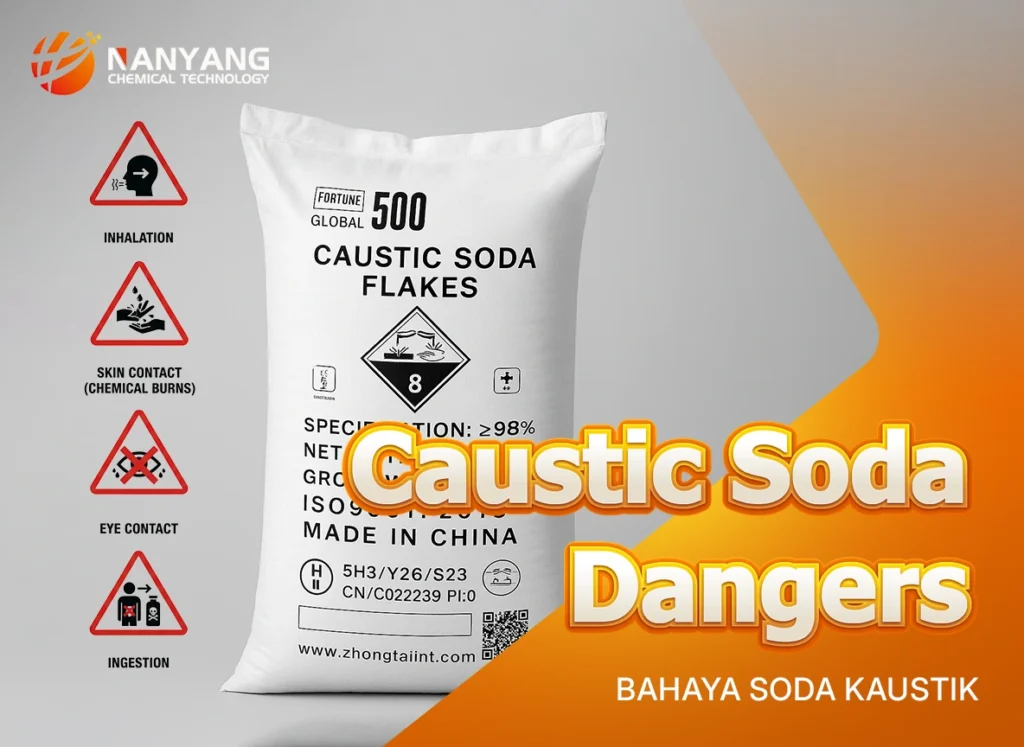
In Malaysia’s vibrant industrial landscape—from the massive scale of palm oil refineries and their vital downstream processing to the intricate demands of water treatment facilities and the production of everyday soaps and detergents—one chemical stands out for its sheer utility and transformative power: Caustic Soda, scientifically known as Sodium Hydroxide (NaOH). This robust alkaline compound is an indispensable cornerstone, driving essential processes like saponification, pH adjustment, and chemical synthesis, directly contributing to the nation’s economic output and global competitiveness.
However, the powerful chemical reactivity that makes NaOH so valuable is precisely what makes the topic of caustic soda dangers an absolute necessity for every supervisor, operator, and procurement manager in the country. This chemical is not merely a strong irritant; it is a highly corrosive substance whose hazards, if not strictly managed, can lead to devastating consequences for personnel, significant damage to infrastructure, and crippling regulatory penalties. Ignoring the caustic soda dangers is, simply put, a risk no responsible Malaysian enterprise can afford to take.
Our objective is to move beyond general awareness and provide a definitive, actionable guide to understanding and effectively mitigating the risks associated with this fundamental chemical. The dangers extend far beyond simple skin contact. We will dissect the insidious mechanisms of chemical burns, the hidden threat of respiratory exposure, the catastrophic potential of exothermic reactions during mixing, and the critical precautions required for compliant storage. True safety involves a holistic approach—from robust PPE protocols to precise handling procedures and swift, life-saving first aid.
In a competitive market, choosing a supplier that prioritizes quality and safety support is just as critical as managing the product itself. This is where Nanyang Chemical positions itself as more than just a leading supplier of high-purity Caustic Soda in Malaysia. We understand that our responsibility does not end at the point of delivery. We are committed to fostering a culture of safety by providing product that adheres to the strictest global purity standards and offering the technical guidance and certified Safety Data Sheets (SDS) that Malaysian industries rely on for full regulatory compliance. When you search for caustic soda dangers, you are seeking knowledge to protect your assets and your people; when you partner with Nanyang Chemical, you receive both the premium product and the confidence that comes with working alongside a dedicated safety partner. This guide is your first essential step in transforming risk into rigorous safety management.
- The Immediate Threats : Direct Exposure Dangers
- Hidden Hazards : Reaction Risks and Infrastructure Damage
- The Shield : Essential Safety Protocols and First Aid
- Partnering for Safety and Purity in Malaysia
- Frequently Asked Questions (FAQ) on Caustic Soda Safety
The Immediate Threats : Direct Exposure Dangers
While the industrial benefits of Caustic Soda (NaOH) are significant, the caustic soda dangers posed by direct, unprotected exposure represent the most immediate and severe threats to personnel safety within any operational environment. As a powerful, highly corrosive alkali, NaOH acts aggressively upon organic tissue, penetrating and destroying cellular structures through chemical processes that continue until the chemical is neutralized or thoroughly washed away. Understanding the mechanism of these attacks is crucial for establishing effective preventative and emergency protocols.
A. Skin Contact: The Silent Burn (Saponification and Protein Hydrolysis)
Unprotected contact with solid NaOH (flakes, pearls) or its concentrated solution is arguably the most common and feared of the caustic soda dangers. Unlike exposure to strong acids, which typically cause immediate, sharp pain and visible coagulation (denaturation) of tissue, the burn caused by caustic soda is often insidious, leading to delayed recognition and deeper injury.
The Mechanism of Destruction:
- Saponification of Fats: The skin’s protective barrier is rich in lipids (fats). Caustic soda actively reacts with these fats in a process called saponification, effectively turning them into soap. This action dissolves the cell membranes and structural lipids of the skin’s surface, destroying the protective layer.
- Protein Hydrolysis: Once the protective barrier is breached, the OH- ions attack the structural proteins (like keratin) deeper in the dermis and subcutaneous tissues. This protein hydrolysis breaks down the tissue structure, allowing the alkali to penetrate deeper layers of the skin.
- The “Silent” Penetration: The soapy nature of the saponified fat initially provides a temporary, slippery feeling, often masking the severity of the underlying burn. Pain signals may be delayed for minutes, allowing the chemical to soak deeper into the tissue before the victim realizes the full extent of the exposure. This delay is why Caustic Soda Burns are often classified as Second or Third-Degree Burns
by the time medical attention is sought. These injuries frequently require extensive medical intervention, including skin grafting, and can result in permanent scarring or loss of function.
B. Eye Contact: The Pathway to Blindness
Exposure of the eyes to Caustic Soda, whether in the form of airborne dust, solution splashes, or mist, constitutes one of the most critical and time-sensitive of all caustic soda dangers. The eyes are exceptionally vulnerable, and the potential for irreversible damage is extremely high.
The “Liquefaction Necrosis” Effect:
- The cornea and conjunctiva (the clear front surface and membrane lining the eyelids) contain high levels of protein. When NaOH comes into contact with the eye, the process of liquefaction necrosis begins immediately.
- The alkaline solution rapidly penetrates the cornea, destroying cells and dissolving the tissue, allowing the chemical to reach deeper structures, including the iris and lens.
- Unlike the coagulation necrosis caused by acids, which often forms a protective, albeit opaque, barrier that slows further penetration, the liquefaction caused by NaOH destroys and softens the tissue, enabling rapid, unimpeded progress into the eye’s inner chambers.
- Outcome: Even momentary exposure can lead to severe corneal clouding, cataracts, glaucoma, and ultimately, permanent blindness. Immediate and prolonged emergency flushing is the only viable defense against this catastrophic outcome.
C. Inhalation Hazard: The Invisible Respiratory Threat
While dermal and ocular contacts are the most apparent caustic soda dangers, the risk of respiratory exposure, particularly in poorly ventilated areas, is a serious, often underestimated threat. This is especially relevant in operations involving the mixing of solid NaOH into water or in processes generating fine alkaline mists.
Risks to the Airways:
- Dust Exposure: When solid flakes or pearls are handled, fine dust particles can become airborne. Inhaling this dust can cause immediate and severe irritation to the mucous membranes of the nose, throat, and respiratory tract.
- Mist/Aerosol Exposure: Concentrated solutions, especially when mixed improperly or agitated, can release a corrosive mist or aerosol.
- Mechanism: The inhaled alkaline particles dissolve in the moist lining of the respiratory tract, initiating the same corrosive action seen on the skin. This can lead to:
- Severe nose and throat irritation.
- Persistent coughing, sneezing, and choking.
- In severe cases, chemical pneumonitis or pulmonary edema (fluid accumulation in the lungs), which can impair breathing capacity and be fatal.
- Mitigation: The presence of localized exhaust ventilation and the mandatory use of appropriate respiratory protection (e.g., full-face respirators) are non-negotiable requirements for handling NaOH, particularly in enclosed or confined spaces.
D. Ingestion: Internal Catastrophe
While accidental ingestion is less common in industrial settings than skin or eye contact, the ingestion of Caustic Soda solution is potentially the most life-threatening of all caustic soda dangers.
- Internal Corrosivity: Swallowing even a small amount of concentrated solution causes immediate, severe, and widespread chemical burns throughout the entire digestive tract—from the mouth and throat to the esophagus and stomach.
- Long-Term Impact: Survivors of NaOH ingestion often face debilitating, long-term consequences, including:
- Strictures (narrowing) of the esophagus, requiring repeated dilation procedures or surgery.
- Permanent damage to the stomach lining, severely impacting digestion and nutrition.
E. Nanyang Chemical’s Commitment to Safety
For industries navigating these critical caustic soda dangers in Malaysia, sourcing high-quality NaOH that is consistently packaged and accompanied by transparent safety documentation is paramount. Nanyang Chemical emphasizes that product purity and standardized handling procedures significantly reduce risks. Our commitment extends to providing comprehensive support, ensuring that our clients are fully equipped with the knowledge and the resources to implement the necessary protective measures against these immediate threats, making safety compliance an intrinsic part of every operation.
Hidden Hazards : Reaction Risks and Infrastructure Damage
The most immediate and obvious caustic soda dangers relate to direct bodily exposure. However, concentrating solely on these dermal and ocular risks leads to overlooking a set of “hidden hazards” rooted in the chemical’s inherent reactivity. These dangers pose profound threats not only to personnel safety but also to the structural integrity of facilities, equipment, and the operational environment. Managing these risks is crucial for long-term safety compliance and operational longevity within the Malaysian industrial sector.
A. Exothermic Reaction: The Splatter and Steam Risk
The most significant hidden hazard when handling solid caustic soda (pearls or flakes) is the violent exothermic reaction that occurs upon dilution or mixing with water. This process generates substantial, rapid heat, which can quickly lead to dangerous pressure build-up, splashing, and the creation of highly corrosive steam or mist.
The Thermodynamics of Danger:
The dissolution of NaOH in water is a highly negative enthalpy process:

- Rapid Temperature Spike: The heat (Q) released can quickly bring the localized solution to boiling point. If the process is rushed, or the water volume is insufficient, the rapid heating can cause the water to flash into steam.
- Violent Splashing: This sudden steam generation or boiling can forcefully eject the corrosive, superheated NaOH solution out of the container. This hot liquid splash poses a combined threat: a severe thermal burn and a corrosive chemical burn. This combination dramatically intensifies the caustic soda dangers associated with mixing and dilution.
- Corrosive Mists: The steam generated during rapid heating carries micro-droplets of corrosive NaOH mist into the surrounding atmosphere, creating an inhalation risk that can travel beyond the immediate work area.
Crucial Mitigation Protocol: The AAW/NWA Rule
To manage this thermal hazard, two protocols are mandatory and non-negotiable:
- Always Add Caustic Soda to Water (AAW): Adding the solid, a little at a time, to the larger volume of water allows the substantial volume of water to absorb and dissipate the heat more effectively and slowly.
- Never Add Water to Caustic Soda (NWA): Adding a small volume of water to a large amount of solid NaOH creates a highly concentrated localized reaction, leading to an almost instant, violent boil-up and explosion of chemical.
- Temperature Control: Using cold water and ensuring continuous, gentle stirring is necessary to control the reaction rate and prevent localized superheating.
B. Reactivity with Metals: Hydrogen Gas Generation and Structural Failure
A core element of the caustic soda dangers is its ability to corrode certain common industrial metals, leading not only to structural failure but also to the generation of a highly flammable and explosive byproduct.
The Hydrogen Hazard:
Caustic soda reacts readily with amphoteric metals, such as Aluminum (Al), Zinc (Zn), and alloys often found in galvanized steel. The reaction releases diatomic Hydrogen Gas (H2):

- Explosion Risk: Hydrogen is extremely flammable. If the reaction occurs within a closed system, storage tank, or poorly ventilated area, the gas can accumulate rapidly. When the concentration reaches the flammable limit (Lower Explosive Limit – LEL), a spark, static charge, or heat source can trigger a catastrophic explosion.
- Infrastructure Damage: The constant corrosion of metal pipes, valves, and tank linings (even in stainless steel grades susceptible to caustic attack) leads to premature equipment failure, leaks, and costly downtime.
- Protocol: Storage and transport equipment must be constructed from highly resistant materials, predominantly specific grades of Stainless Steel (304 or 316L) or high-density, chemical-resistant HDPE/PP plastics. Regular, rigorous inspection for pitting and cracking is mandatory.
C. Storage & Degradation: The Purity and Handling Challenge
The physical and chemical properties of NaOH present significant hazards during long-term storage, impacting both product purity and safe handling.
Hygroscopic and Carbon Dioxide Absorption:
Caustic soda is highly hygroscopic, meaning it rapidly absorbs moisture from the atmosphere. It also readily reacts with atmospheric carbon dioxide (CO2).

- Loss of Purity and Caking: The absorption of H2O causes the solid to “cake” and solidify, making it extremely difficult to handle, weigh, and dispense safely. The reaction with CO2 forms Sodium Carbonate (Na2CO3), which lowers the purity and effectiveness of the product.
- Handling Risks: Breaking up caked, solid NaOH creates excessive, fine dust, increasing the respiratory caustic soda dangers and inhalation risk. Workers must avoid storing opened containers or relying on compromised packaging.
D. Nanyang Chemical: Supplying Safety from the Source
To combat these hidden hazards, especially in the challenging humid and hot climate of Malaysia, Nanyang Chemical guarantees the integrity of our product chain. We utilize robust, industry-leading packaging, often multi-layered and specifically designed to be moisture-resistant, minimizing the risk of caking and dust generation. By supplying certified, high-purity NaOH, we ensure that the chemical reactions our clients perform are predictable and measurable. Choosing a reliable supplier is the first, essential line of defense against both the visible and the hidden caustic soda dangers, securing both operational reliability and personnel safety.
The Shield : Essential Safety Protocols and First Aid
The knowledge of caustic soda dangers is only half the battle; the other, more critical half lies in establishing and rigorously enforcing robust safety protocols and ensuring immediate, effective emergency response capabilities. The severity of Sodium Hydroxide (NaOH) exposure dictates that preparedness must be proactive, comprehensive, and uncompromising. This section outlines the essential “Shield” measures—Personal Protective Equipment, Safe Handling Procedures, and Critical First Aid—necessary to protect personnel and facilities across Malaysian industrial operations.
A. Personal Protective Equipment (PPE) – The Non-Negotiables
Personal Protective Equipment is the primary physical barrier against the corrosive effects of NaOH. Due to the deep penetration caused by alkaline burns, standard workwear is insufficient. Specific, chemical-resistant gear is mandatory for all personnel involved in handling, mixing, or being in proximity to open NaOH processes.
- Eye and Face Protection: This is the most critical defense against irreversible injury.
- Full Face Shield: Must be worn over goggles. The shield protects the entire face from splashes and mists, especially during mixing or cleaning.
- Chemical Splash Goggles: These must be tightly fitting and non-vented or indirectly vented to prevent liquid or fine dust from entering the eye area. Standard safety spectacles are entirely inadequate.
- Hand Protection: Gloves must be chosen based on the concentration and duration of expected exposure.
- Material: Gloves must be made of materials resistant to strong bases, such as neoprene, natural rubber, butyl rubber, or nitrile (for low concentrations/short duration). PVC gloves are often insufficient.
- Length: Gloves should be long enough to cover the wrist and the cuff of the protective jacket/sleeves to prevent chemical runoff from entering the garment.
- Body Protection:
- Chemical-Resistant Aprons and Suits: Impervious, long-sleeved aprons or full body suits (e.g., made of coated polyethylene or PVC) must be worn to prevent solution from soaking through clothing.
- Boots: Chemical-resistant boots should be worn, with the trouser legs worn outside the boot opening to prevent liquid from running into the footwear.
- Respiratory Protection: For tasks involving dust (handling solid flakes/pearls) or mist/fume generation (mixing, venting, cleaning spills), certified respirators are essential.
- Type: This may range from P-100 particulate filters for dust, to full-face air-purifying respirators with HEPA/acid gas cartridges, or even supplied-air systems for highly confined spaces or emergency response.
B. Safe Handling and Mixing Procedures ⚙️
Preventing accidents is always superior to managing exposure. Rigorous, standardized operational procedures are the cornerstone of mitigating the caustic soda dangers.
- Ventilation and Containment:
- Local Exhaust Ventilation (LEV): All mixing, weighing, and dispensing operations must be conducted under LEV or in a designated fume hood to capture airborne dust and mists before they can expose personnel.
- Secondary Containment: Storage tanks and mixing vessels must be located within berms or catchment trays capable of containing the entire volume of the largest container plus an allowance for firefighting water, minimizing environmental and facility damage from spills.
- The Dilution Protocol (The AAW/NWA Rule Revisited):
- Cold Water First: The correct volume of cold water must be in the mixing vessel before the NaOH is added.
- Slow Addition with Stirring: Solid NaOH must be added very slowly, in small increments, while constantly stirring the water. This controls the rate of the highly exothermic reaction, preventing flash boiling, splashing, and corrosive mist generation.
- Temperature Monitoring: If possible, the temperature of the solution should be monitored continuously. If it approaches the boiling point, addition must be stopped immediately to allow for cooling.
- Storage Integrity:
- Airtight and Dry: Solid NaOH must be stored in original, tightly sealed, moisture-proof containers in a cool, dry area to prevent hygroscopic caking and CO2 reaction.
- Segregation: Store NaOH away from incompatible materials, particularly strong acids, aluminum, zinc, and organic compounds, to prevent violent reactions or the generation of flammable hydrogen gas.
C. Critical First Aid (The Race Against Time)
Immediate and correct first aid is the single most important factor in limiting the severity of a caustic soda injury. Because the alkaline chemical penetrates deeply (liquefaction necrosis), every second counts. The goal is rapid, prolonged decontamination.
- Skin Contact:
- Immediate Action: Flood the affected area immediately with copious amounts of water from a safety shower or hose. Do not waste time removing clothing; start flushing through the clothing first.
- Decontamination: Continue flushing for a minimum of 15 to 30 minutes. The continuous flow helps neutralize the chemical and physically remove it from the tissue.
- Clothing Removal: Remove all contaminated clothing while under the safety shower.
- Seek Medical Aid: Transport the victim to a medical professional immediately, even if the burn initially appears minor, as the damage may be delayed.
- Eye Contact:
- Urgent Flushing: Immediately flush the eye(s) using an eyewash fountain for a minimum of 15 to 30 minutes. The victim must forcibly hold their eyelids open to ensure water reaches the entire surface, including under the lids.
- Medical Emergency: After the prolonged flush, cover the eyes with a clean, sterile dressing (do not apply pressure) and seek immediate, specialized medical attention (ophthalmologist).
- The “Do Not” List:
- DO NOT attempt to neutralize the burn with a weak acid (e.g., vinegar). The neutralization process itself is exothermic, generating heat that exacerbates the burn injury.
- DO NOT apply creams, ointments, or powders to the burn before the area has been thoroughly flushed.
D. Nanyang Chemical’s Partnership in Compliance
For Malaysian industries navigating the severe caustic soda dangers, compliance with Department of Occupational Safety and Health (DOSH) regulations is paramount. Nanyang Chemical supports this effort by providing:
- Compliant SDS: Up-to-date, comprehensive Safety Data Sheets are provided with every shipment, detailing local storage, handling, and first aid requirements.
- High-Integrity Packaging: Our packaging is selected to minimize rupture, dusting, and exposure during transport and handling, supporting safer operations from the moment the product arrives at the facility.
By integrating these safety protocols—from the choice of PPE to the strict adherence to mixing and first aid rules—Malaysian businesses can effectively shield their workforce and infrastructure from the inherent risks of NaOH, turning potential danger into controlled, professional industrial practice.
Partnering for Safety and Purity in Malaysia
The analysis of caustic soda dangers is clear: Sodium Hydroxide (NaOH) is an invaluable but inherently hazardous chemical. Its power to transform raw materials into final products—from refined palm oil to clean water—is matched only by its ability to cause catastrophic chemical burns, generate explosive hydrogen gas, and trigger violent exothermic reactions. For Malaysian industries, safety is not merely a box to tick but a continuous process driven by adherence to the strictest DOSH (Department of Occupational Safety and Health) regulations, meticulous procedural compliance, and a commitment to using the highest-quality materials.
We have established that mitigating these caustic soda dangers requires a multifaceted approach: The Shield of specialized Personal Protective Equipment (PPE), the Discipline of the Always Add Caustic Soda to Water (AAW) protocol, and the Speed of immediate, prolonged flushing during a first aid emergency. Any weak link in this chain—be it compromised equipment integrity, a momentary lapse in procedure, or substandard chemical purity—can lead to unacceptable risks.
This is precisely why choosing the right supply partner is a critical safety decision. Nanyang Chemical is committed to being more than just a chemical vendor in the Malaysian industrial ecosystem; we are your dedicated safety partner. We supply high-purity NaOH (pearls and flakes) housed in certified, robust, moisture-resistant packaging, specifically designed to minimize dusting, caking, and exposure risks during handling and storage in the humid climate. Furthermore, we provide locally relevant technical support and comprehensive, up-to-date Safety Data Sheets (SDS), empowering your team to maintain compliance and operational excellence.
Don’t compromise the safety of your personnel or the integrity of your infrastructure. Mitigate the known and hidden caustic soda dangers by choosing a supplier whose commitment to safety and purity matches your own operational standards.
Contact Nanyang Chemical today for a full consultation on our premium Caustic Soda solutions and how we can support your facility’s commitment to safety and regulatory compliance.