
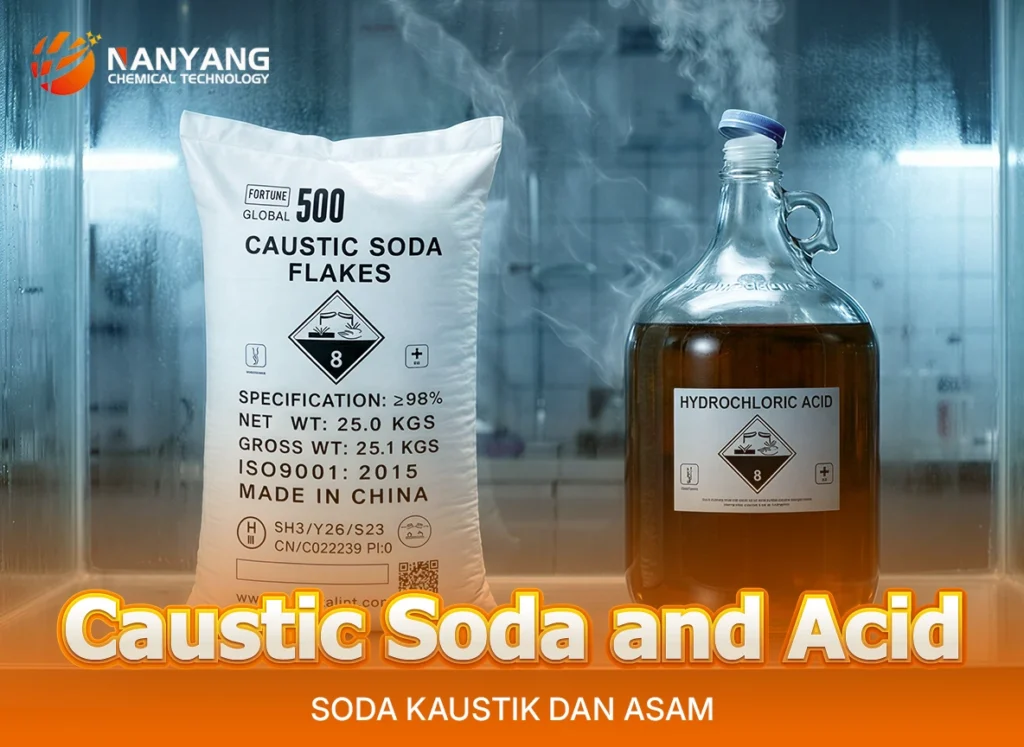
The intricate world of industrial chemistry relies fundamentally on the controlled interaction of core substances. At the heart of countless manufacturing and processing operations—particularly in a rapidly industrializing nation like Malaysia—lies the crucial relationship between strong bases and strong acids. Understanding, mastering, and safely managing this interaction is not just about chemical knowledge; it’s about ensuring operational efficiency, compliance with stringent environmental regulations, and protecting infrastructure and personnel.
The two main players in this chemical drama are caustic soda and various industrial acids. Caustic soda, the common name for Sodium Hydroxide (NaOH), is a powerful alkaline compound. It is one of the world’s most versatile industrial chemicals, consumed in massive quantities across sectors ranging from palm oil refining and oleochemicals (vital to the Malaysian economy) to alumina production, soap and detergent manufacturing, and textile processing. Its primary characteristic is its ability to powerfully raise the pH level of a solution. It is often supplied as white flakes or a liquid solution, and its high alkalinity makes it extremely corrosive.
Conversely, industrial acids—such as hydrochloric acid (HCl), sulfuric acid (H2SO4), or nitric acid (HNO3)—are defined by their ability to lower the pH and donate protons (H+). These substances are equally essential, used in metal pickling, fertilizer production, battery manufacturing, and crucial pH lowering processes. However, like caustic soda, their high reactivity demands the utmost respect and rigorous safety protocols.
The interaction between these two potent forces—the strong base, caustic soda, and the industrial acid—forms the bedrock of the essential chemical process known as neutralization. In simple terms, neutralization is the reaction where an acid and a base mix to form salt and water, effectively bringing the solution’s pH closer to a neutral value of 7. The primary goal in industrial settings is to use caustic soda to neutralize acidic effluent or wastewater produced during manufacturing. Discharging highly acidic or alkaline water is strictly prohibited by regulatory bodies, such as the Department of Environment (DOE) in Malaysia. Therefore, pH control via controlled neutralization is not a choice, but a mandatory step in environmental compliance. This precise balancing act is key to avoiding penalties, preventing corrosion in plant equipment, and protecting local ecosystems.
This article serves as an indispensable guide for Malaysian professionals—from procurement managers and R&D chemists to plant supervisors—who need a comprehensive understanding of the chemistry, safe handling, and reliable sourcing of caustic soda and acid. We will delve into the precise mechanisms of the reaction, outline the non-negotiable safety procedures, and highlight how a reliable supply partner like Nanyang Chemical ensures both your operational continuity and safety compliance in managing these powerful chemical agents.
The Chemistry of Caustic Soda and Acid
The controlled interaction between caustic soda and acid is the fundamental chemical principle underpinning pH management in the industrial landscape. This section delves into the stoichiometry, reaction mechanisms, and critical thermodynamic considerations that govern this crucial process, allowing for safe and precise environmental compliance in operations across Malaysia.
The Foundation: Neutralization Reaction Stoichiometry
The primary goal of mixing caustic soda (Sodium Hydroxide, NaOH, a strong base) with an industrial acid is neutralization. A neutralization reaction is a type of double displacement reaction where an acid and a base react quantitatively with each other to form a salt and water.
The fundamental net ionic equation, which represents the reaction between any strong acid and any strong base, is:

This equation shows the combination of hydrogen ions (H+) from the acid and hydroxide ions (OH-) from the base to form neutral water. The remaining ions—the cation (Na+) from the caustic soda and the anion from the acid—form the resulting salt.
We can illustrate this using two of the most common industrial acids:
- Reaction with Hydrochloric Acid (HCl): A monoprotic acid (donates one H+ ion).
NaOH (aq) + HCl (aq) -> NaCl (aq) + H2O(l)
In this 1:1 molar ratio, one mole of caustic soda neutralizes one mole of hydrochloric acid, producing table salt (sodium chloride) and water. - Reaction with Sulfuric Acid (H2SO4): A diprotic acid (donates two H+ ions).
2NaOH (aq) + H2SO4 (aq) -> Na2SO4 (aq) + 2H2O (l)
Crucially, this reaction requires a 2:1 molar ratio; two moles of caustic soda are needed to fully neutralize one mole of sulfuric acid, yielding sodium sulfate salt and water. This difference in stoichiometry is vital for accurate industrial dosing and pH control.
The Critical Thermodynamic Consideration: Exothermic Reaction
Every neutralization involving a strong caustic soda and acid is an exothermic reaction, meaning it releases thermal energy (heat) into the surroundings.
The amount of heat released per mole of water formed is known as the Heat of Neutralization (ΔHN). For the reaction between any strong acid and strong base, this value is consistently high, approximately -57.3 kJ per mole of H2O formed.
- Risk of Temperature Rise: In industrial applications, especially when dealing with concentrated stock solutions of caustic soda (often 50%) and concentrated acids (e.g., 98% H2SO4), this heat release is a significant safety and operational concern. Mixing highly concentrated solutions can cause a rapid, substantial temperature increase—potentially enough to:
- Vaporize the solution, causing hazardous steam and corrosive liquid splash-back.
- Melt thermoplastic piping and equipment.
- Compromise the structural integrity of containment vessels.
- Mitigation: To safely manage this heat, industrial processes strictly adhere to the following:
- Dilution First: Concentrated solutions must be carefully and slowly diluted with water before the neutralization process begins to manage the heat of solution (which is itself exothermic for NaOH).
- Controlled Dosing: The base (caustic soda) or acid is added very slowly and gradually to the other reactant, often within a large, stirred reaction tank where the volume of the solution acts as a heat sink. Continuous temperature monitoring is mandatory.
The Mechanism of pH Adjustment
The measurement of pH (the ‘power of Hydrogen’) dictates the state of the solution, where pH = -log[H+].
- Acidic Conditions (pH < 7): An abundance of H+ ions.
- Alkaline Conditions (pH > 7): An abundance of OH- ions.
In industrial wastewater treatment—a major application in Malaysia’s manufacturing sector—acidic effluent is common. The goal is to raise the pH to a neutral range (typically pH 6.0 to 9.0) before discharge, as mandated by the DOE. Caustic soda achieves this by introducing the strong OH- ions, which react with and consume the excess H+ ions in the acidic solution: H+ + OH- -> H2O. This consumption drives the pH up in a measurable and controllable fashion.
The precision of this process is achieved through titration principles, where the known concentration of caustic soda is added incrementally until the desired pH setpoint is reached. Modern pH adjustment systems use automated probes and dosing pumps to maintain this delicate balance in real-time.
The Salt Byproduct
The salt generated (NaCl, Na2SO4, etc.) is often water-soluble. While this is beneficial for pump maintenance (unlike neutralization with lime, which forms precipitate/sludge), the high salt content (Total Dissolved Solids, or TDS) must also be monitored to ensure it meets environmental discharge limits. Effective management of the caustic soda and acid reaction ensures that both the corrosive pH and the resulting salt load are environmentally sound.
The video below offers an instructional perspective on the titration process, which demonstrates the precision required in managing acid-base neutralization.
Industrial Applications of Caustic Soda in Malaysia
The industrial heartbeat of Malaysia, spanning key sectors from agriculture processing to advanced manufacturing, relies heavily on the controlled application of bulk chemicals. Among these, caustic soda (NaOH) stands out as a foundational, indispensable material. While its interaction with acid is chemically fundamental, its operational role in Malaysian industries is incredibly diverse, primarily serving as a potent alkaline agent for purification, treatment, and critical pH management.
Caustic Soda in Malaysia’s Flagship Industry: Palm Oil and Oleochemicals
Malaysia is one of the world’s leading producers of palm oil, and caustic soda is non-negotiable in the production and refinement processes of this crucial commodity and its downstream derivatives, oleochemicals.
- Refining Crude Palm Oil (CPO): Crude palm oil contains free fatty acids (FFA), which must be removed to produce edible or higher-grade industrial oil. The primary method used is chemical refining, which employs caustic soda in a process called neutralization. The NaOH reacts with the FFAs to form soapstock (a byproduct). This process not only purifies the oil but also sets the quality parameters for subsequent processing. The precision required in this step is immense, as incorrect caustic soda dosing can lead to oil loss or insufficient FFA removal.
- Oleochemical Production (Saponification): Oleochemicals—such as fatty alcohols, fatty acids, and glycerin—are derived from natural oils and fats. The process of saponification, the foundation of soap making, involves the hydrolysis of triglycerides using caustic soda as the key reactant. This reaction yields soap (the sodium salt of the fatty acid) and glycerin. Malaysia’s thriving oleochemical industry depends entirely on a consistent supply of high-purity caustic soda flakes or liquid for these complex manufacturing steps.
Environmental Compliance: Wastewater Treatment an pH Control
The most critical and universal application of the caustic soda and acid relationship is in industrial wastewater treatment. This is a mandatory operational requirement in Malaysia, driven by the DOE’s environmental quality regulations.
- Neutralization of Acidic Effluent: Many industrial processes, including metal finishing, electroplating, chemical manufacturing, and even certain stages of palm oil processing, generate highly acidic wastewater (pH < 5). Discharging this effluent directly into rivers or drainage systems is illegal and harmful to the environment. Caustic soda is the most common and effective alkaline reagent used to raise the pH level to the legally required discharge range (typically pH 6.0 to 9.0).
- The use of caustic soda is often preferred over less reactive bases (like lime) because it dissolves quickly, reacts instantly, and does not produce large volumes of unwanted precipitate (sludge), leading to simpler sludge management.
- Controlling the Caustic/Acid Balance: While the primary goal is often to neutralize acid, some facilities may also use industrial acid (like sulfuric acid) to neutralize highly alkaline effluent (often containing residual caustic soda). Therefore, a sophisticated facility must have systems in place to manage both caustic soda and acid dosing to maintain the effluent pH within the narrow target band, representing the essential industrial application of the caustic soda and acid chemical system.
Water Purification and Regeneration
Beyond effluent treatment, caustic soda plays an important role in purifying process water used within the plant itself, particularly in the regeneration of demineralization (DM) water systems.
- Ion Exchange Resin Regeneration: Many plants utilize ion exchange resins to produce high-purity (DM) water for boilers, cooling towers, and specialized processes. When the cation exchange resin becomes saturated, it must be regenerated. Caustic soda is used as the regenerant chemical for the anion exchange resin, displacing accumulated anions and restoring the resin’s capacity to remove impurities from the water, ensuring the plant maintains a continuous supply of high-quality process water.
Specialized Manufacturing Applications
The utility of caustic soda extends into diverse specialized manufacturing applications where its strong basic properties are irreplaceable:
- Detergent and Soap Manufacturing: As mentioned earlier, caustic soda is a primary ingredient in the production of cleaning agents, providing the strong alkalinity necessary to break down fats, oils, and greases.
- Pulp and Paper Industry: Although less dominant in Malaysia compared to other regions, the chemical pulping process (Kraft process) requires NaOH to dissolve lignin and separate cellulose fibers.
- Bayer Process (Alumina Production): For facilities involved in the processing of bauxite ore into alumina, the caustic soda solution is used to dissolve the aluminum compounds from the ore. The recovery and management of this caustic soda solution are central to the economic viability of the entire process.
Operational and Supply Chain Importance
For Malaysian industries, the decision to use caustic soda and acid is often a trade-off between chemical efficacy and logistical complexity. Caustic soda is highly effective but demands strict storage and handling compliance. Procuring a reliable, high-volume supply is therefore a strategic decision. Local suppliers, like Nanyang Chemical, provide the necessary logistical backbone—offering consistent quality, compliance certification, and reliable delivery schedules that mitigate supply chain risks inherent in handling such critical and hazardous materials, thereby enabling continuous industrial operation in Malaysia.
Mandatory Safety Protocols & Best Practices
The necessity of caustic soda and acid in Malaysian industry is matched only by the critical importance of safety when handling them. Due to their highly corrosive nature, these chemicals pose significant risks to personnel, equipment, and the environment. Therefore, adherence to strict, mandatory safety protocols is not merely recommended—it is legally required under Malaysian occupational safety and health regulations, and failure to comply can lead to severe penalties, injuries, and operational shutdowns.
Personal Protective Equipment (PPE): The First Line of Defense
No procedure involving the transfer, dilution, or reaction of caustic soda and acid can begin without the correct PPE in place. Because these substances can cause severe chemical burns upon contact, the PPE must be comprehensive and specifically designed for corrosive chemical handling.
- Eye and Face Protection: Chemical splash goggles and/or full-face shields are essential. Standard safety glasses are insufficient, as they do not protect against lateral splashes.
- Hand Protection: Heavy-duty, long-cuff gloves made of chemical-resistant materials (e.g., Neoprene, Butyl Rubber) are required. Gloves must be inspected for pinholes or tears before every use.
- Body Protection: Chemical-resistant aprons, suits, or coveralls must be worn. The material must be impermeable to both strong bases (caustic soda) and acids.
- Foot Protection: Chemical-resistant safety boots are necessary to protect against spills and splashes to the feet.
The Golden Rule of Dilution and Mixing Control
The most hazardous phase of handling concentrated caustic soda or industrial acid is the act of dilution or controlled neutralization, primarily due to the exothermic nature of the reaction (as discussed in Section 2). The release of heat must be strictly managed to prevent rapid boiling, vaporization, and subsequent explosion risk or violent splash-back.
- Always Add Concentrate to Water, Never Water to Concentrate: This is a fundamental principle of chemical safety. When concentrated caustic soda (flakes or liquid) or concentrated acid is added slowly to a large volume of water, the water acts as an efficient heat sink, absorbing the released thermal energy and preventing localized overheating. Adding water directly to a concentrated chemical can cause the water to flash boil instantly due to the extreme heat generated, resulting in an explosive spray of corrosive chemical mist.
- Slow Addition and Cooling: During neutralization or dilution processes, the concentrated chemical must be added slowly and continuously while the solution is being vigorously stirred. In large industrial reactors or treatment tanks, external cooling systems (e.g., cooling jackets or coils) should be utilized to maintain the temperature of the reaction mixture within safe limits, typically below 60C to 80C.
Storage and Segregation Compliance
Proper storage is mandated to prevent accidental mixing of caustic soda and acid and to maintain chemical integrity.
- Segregation: Caustic soda (base) and industrial acids must never be stored in close proximity. Storage facilities must be physically separated by adequate distance, or by a non-combustible barrier wall, to prevent any leakage or spill from one chemical coming into contact with the other. Storing these chemicals together dramatically increases the risk of a catastrophic, uncontrollable reaction.
- Containment: All storage tanks and drums must be placed within secondary containment areas (bunds or dikes) capable of holding at least 110% of the largest container’s volume, preventing spills from reaching drains or neighbouring storage areas.
- Ventilation and Material Compatibility: Storage areas must be well-ventilated. Tanks and piping must be made of materials compatible with the stored chemical. For instance, caustic soda should not be stored in aluminum containers, as it corrodes aluminum and produces highly flammable hydrogen gas.
Emergency Response Protocols
Despite all precautions, spills and exposures can occur. Comprehensive, regularly practiced emergency procedures are essential.
- Spill Response:
- Containment: Immediately stop the source of the leak and contain the spill using inert absorbent materials (e.g., sand or commercial spill pads). Avoid using organic materials like sawdust.
- Neutralization (Spills Only): For small, contained spills, weak neutralizing agents can be used cautiously. For caustic soda spills, a weak acid like acetic acid can be used, and for acid spills, a weak base like sodium bicarbonate (baking soda). The goal is to safely render the material non-hazardous for cleanup, never attempting to neutralize the entire volume with a strong opposite concentrate.
- Reporting: All spills, regardless of size, must be immediately reported to the site supervisor and documented according to OSHA and DOE guidelines.
- Personnel Exposure (First Aid):
- Skin/Eye Contact: Immediate irrigation with copious amounts of water is paramount. The affected area must be flushed with flowing water for a minimum of 15 to 20 minutes. Emergency showers and eyewash stations must be highly accessible, clearly marked, and tested regularly.
- Medical Attention: Seek immediate medical attention. Provide the Safety Data Sheet (SDS) of the chemical involved to the medical professionals. Crucially, do not attempt to chemically neutralize the burn injury on the skin, as the heat from the reaction will worsen the damage.
Regulatory Compliance and Training
Compliance with Malaysian regulations requires robust training and documentation:
- Safety Data Sheets (SDS): The SDS for both caustic soda and the industrial acid must be readily available, understood, and adhered to by all personnel handling the chemicals.
- Training and Certification: All employees involved in chemical handling must undergo mandatory, recurring training covering PPE usage, spill response, emergency procedures, and safe transfer techniques.
- Compliance Documentation: Detailed records of chemical inventory, SDS adherence, training logs, and equipment inspections must be meticulously maintained for regulatory audits.
By embedding these stringent protocols into daily operations, Malaysian facilities can harness the powerful utility of caustic soda and acid while effectively mitigating the inherent risks, ensuring a safe working environment and maintaining regulatory compliance.
Partnering with Nanyang Chemical
In the demanding landscape of Malaysian industrial operations, where continuity, quality, and regulatory compliance are non-negotiable, the choice of chemical supplier is a strategic business decision, not merely a transaction. When dealing with high-volume, critical, and hazardous materials like caustic soda and acid, you need more than just a distributor; you need a dedicated partner committed to the success and safety of your operations. This is where Nanyang Chemical distinguishes itself as the premier choice for Malaysian manufacturers.
Uncompromising Quality: The Nanyang Standard for Purity
The integrity of your production process—from refining palm oil to maintaining compliant wastewater discharge—hinges entirely on the purity and consistency of your chemical inputs. Impurities in caustic soda (like heavy metals or excess chloride) are latent liabilities that can poison catalysts, accelerate equipment corrosion, and compromise the quality of the final product.
- Guaranteed Purity: Nanyang Chemical ensures that its Caustic Soda (whether in high-purity flakes, pearls, or 50% liquid solution) consistently meets or exceeds the most stringent international benchmarks. We guarantee verifiable purity levels, backed by a Certificate of Analysis (CoA) with every single batch. This commitment to consistency ensures optimal reaction efficiency in key processes like saponification and, crucially, predictable results during the vital neutralization of acidic effluent.
- Optimal Formats for Malaysian Needs: We understand that every operation is different. Nanyang Chemical provides:
- 50% Liquid Caustic Lye: Ideal for large-scale, automated industrial processes requiring bulk delivery and continuous dosing (e.g., major water treatment plants).
- 99% Caustic Soda Flakes/Pearls: Perfect for specialty manufacturers or those requiring a highly concentrated, solid form for flexibility, reduced shipping costs per unit of active NaOH, and longer shelf stability.
Local Expertise, Robust National Supply Chain
The biggest challenge for Malaysian industrial buyers is mitigating the risks associated with global shipping volatility and complex domestic logistics. Nanyang Chemical solves this by combining global sourcing power with an intimate, localized distribution network.
- Supply Chain Resilience: We maintain strategic local inventory across key industrial zones in Malaysia. This buffer stock is critical for ensuring Just-In-Time (JIT) delivery, insulating your operations from the global supply chain disruptions that could otherwise halt your production lines reliant on caustic soda and acid inputs.
- Specialized Logistics: Caustic soda and acid are hazardous materials. Their transport requires specialized, certified fleets and adherence to strict Department of Environment (DOE) and road safety regulations. Our logistics network utilizes dedicated, certified tank trucks and packaging (from 25kg bags to 1,000kg Jumbo Bags) designed for secure, temperature-controlled, and compliant transport across the peninsula and East Malaysia, reducing your logistical risk profile.
- Streamlined Procurement: Our deep local knowledge means we can navigate regional permits and customs more swiftly, dramatically reducing the lead times that frustrate buyers relying solely on overseas suppliers. This efficiency translates directly into lower inventory holding costs for your business.
Safety and Technical Partnership: Beyond the Transaction
A chemical supplier’s responsibility extends beyond product delivery; it includes a partnership in safety and technical proficiency. Nanyang Chemical views the safe and effective use of caustic soda and acid as a shared commitment.
- Safety Compliance Support: We are staunch advocates for chemical safety. We ensure that every product is accompanied by a comprehensive and up-to-date SDS (Safety Data Sheet), fully compliant with Malaysia’s CLASS Regulations (GHS). Furthermore, our team is available to offer guidance on developing site-specific PPE and spill response protocols, reinforcing your compliance with the Occupational Safety and Health Act (OSHA) of 1994.
- Value-Added Technical Consultation: Our in-house chemical experts and technical consultants possess decades of experience in the specific applications relevant to Malaysia—from optimizing the caustic soda dosage in palm oil refining to fine-tuning the neutralization of acidic wastewater. We don’t just sell; we consult on dosing optimization to help you improve efficiency, reduce waste, and lower your overall chemical footprint and operating costs. This is the definition of a strategic partner.
By choosing Nanyang Chemical, you are securing a reliable, high-purity supply of caustic soda and acid that is backed by localized expertise and an unwavering commitment to quality and safety. Make the strategic choice that guarantees your operational uptime, compliance, and long-term success in the dynamic Malaysian industrial sector.
Conclusion
The journey through the chemistry and application of caustic soda and acid underscores a vital truth for Malaysian industry: these powerful chemicals are the engines of purification, pH control, and essential manufacturing processes. Mastering their interaction—the exothermic neutralization reaction—is the key to both operational efficiency and mandatory environmental compliance. From the delicate balancing act in water treatment to the high-stakes refining of palm oil, the precision of dosing and the commitment to safety protocols are paramount.
We have emphasized that working with caustic soda and acid demands unwavering adherence to the “Golden Rule” of dilution, strict PPE usage, and meticulous segregation during storage. These protocols are the shield that protects personnel and plant assets from the corrosive nature of these agents.
Ultimately, your success hinges on the reliable, safe, and quality-assured supply of these materials. Choosing a supplier that understands the specific logistics and regulatory environment of Malaysia simplifies your compliance burden and strengthens your supply chain resilience.
Nanyang Chemical is committed to being that strategic partner. We provide certified, high-purity caustic soda and acid solutions, backed by a robust local delivery network and technical expertise designed specifically for Malaysian industrial demands. When the precise neutralization of acidic effluent is on the line, or when the purity of your caustic soda dictates the quality of your finished product, trust in a partner whose quality and logistics are proven.