
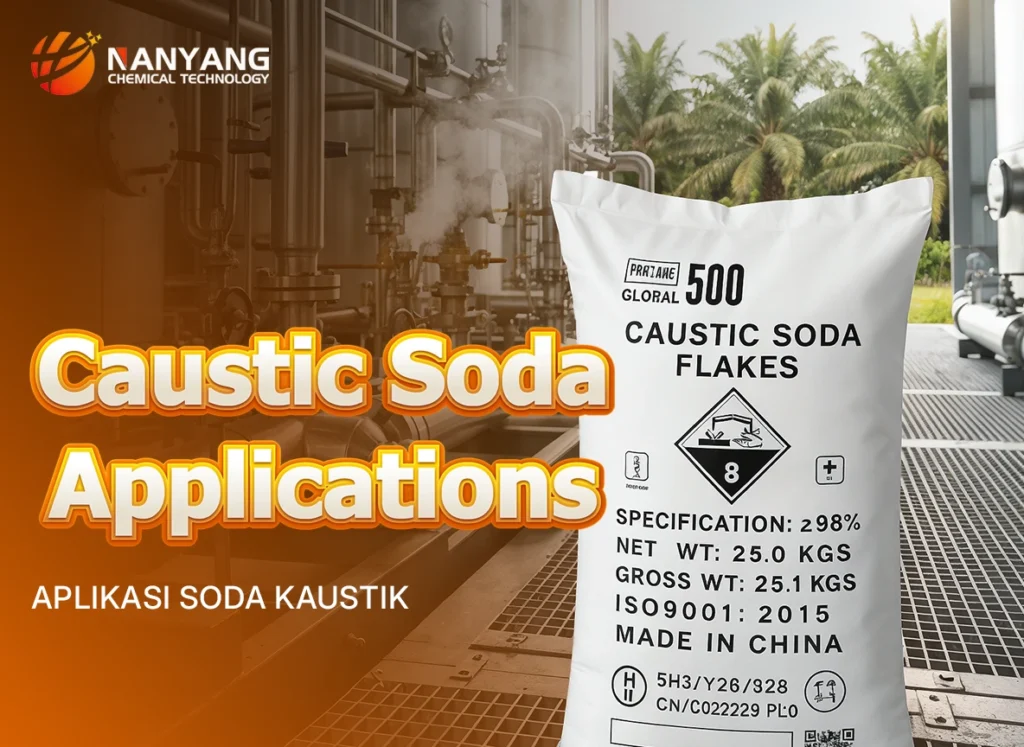
In the world of industrial chemistry, few compounds are as ubiquitous, versatile, and fundamentally critical as Caustic Soda, scientifically known as Sodium Hydroxide (NaOH). Often referred to simply as lye, this inorganic compound is a powerful alkali with a chemical formula that belies its immense impact on global manufacturing. It exists as a white, crystalline solid, which is highly hygroscopic (readily absorbs moisture from the air), and is most frequently handled in industrial settings as an aqueous solution, commonly known as liquid caustic or caustic lye, often supplied at concentrations of 50%.
The sheer range of caustic soda applications across virtually every major industrial sector solidifies its reputation as the ultimate chemical workhorse. From the food we consume and the clothes we wear, to the energy that powers our cities and the water we drink, NaOH plays an invisible, yet indispensable, role. Its potent reactivity—its ability to easily neutralize acids, dissolve fats and oils (saponification), and break down complex organic materials—is the foundation for its widespread utility.
For a dynamic and rapidly developing economy like Malaysia, the reliable supply and application of high-quality caustic soda are non-negotiable for maintaining global competitiveness, particularly in key export-driven sectors.
The industrial landscape of Malaysia is heavily reliant on a few major processes where NaOH is the primary chemical agent:
- Palm Oil Refining: As a global leader in crude palm oil (CPO) production, Malaysia’s refineries depend on caustic soda for the crucial neutralization step. It reacts with the undesirable Free Fatty Acids (FFAs) in the CPO, forming soapstock that is easily separated. This process is essential for producing high-quality Refined, Bleached, and Deodorized (RBD) palm oil, adhering to strict international standards.
- Water and Wastewater Treatment: Environmental compliance is paramount. Caustic soda is used universally in Industrial Effluent Treatment Systems (IETS) to precisely adjust the pH of acidic wastewater, ensuring it meets the stringent discharge requirements set by the Department of Environment (DOE). It also aids in precipitating heavy metal contaminants, making it vital for public and environmental safety.
- Pulp and Paper Industry: NaOH is a core component of the “white liquor” used in the Kraft pulping process, where it separates cellulose fibers from lignin, transforming wood into the base material for paper. It’s also vital in the de-inking process for paper recycling, supporting sustainability goals.
The demand for purity and consistency in caustic soda cannot be overstated. Impurities in the alkali can lead to significant issues, from equipment corrosion and reduced product yield (e.g., higher oil loss in soapstock) to non-compliance with environmental or food-grade standards. For Malaysian industry professionals—Procurement Managers, Operations Directors, and Process Engineers—sourcing a dependable, high-grade product is directly linked to maintaining efficiency and product quality.
Nanyang Chemical specializes in supplying certified-grade caustic soda (in forms like 50% liquid solution, flakes, and pearls) tailored specifically to the high-specification needs of Malaysian manufacturers. Our focus on quality assurance and robust, localized logistics ensures that your critical processes run without interruption, allowing your team to focus on production excellence. This article will explore these essential NaOH applications in detail, underscoring why it remains the alkali of choice for powering the nation’s industrial strength.
- Where NaOH Delivers Critical Performance
- The Nanyang Chemical Advantage for Malaysian Businesses
- Safety and Compliance : Your Partner in Responsible Use
- Conclusion
Where NaOH Delivers Critical Performance
The breadth of caustic soda applications is a testament to the compound’s potent, yet controllable, chemical reactivity. As a powerful, low-cost alkali, Sodium Hydroxide (NaOH) is indispensable in processes requiring high pH environments, neutralization of acids, or the saponification of fats. In Malaysia’s vibrant industrial ecosystem, these applications are foundational to economic output, demanding a consistent supply of high-purity caustic soda to maintain operational efficiency and product quality.
A. Primary Malaysian Demand Driver: Palm Oil Refining
The palm oil industry is arguably the single largest consumer of industrial chemicals in Malaysia, and NaOH stands at the forefront of the refining process.
Application: Neutralization of Free Fatty Acids (FFAs)
Crude Palm Oil (CPO), extracted from the fruit of the oil palm, naturally contains Free Fatty Acids (FFAs), which increase the acidity of the oil and lower its quality and shelf life. The primary purpose of caustic soda in refining is the chemical neutralization of these FFAs.

Technical Detail: The NaOH is precisely dosed into the heated CPO. This strong alkali reacts almost instantaneously with the FFAs to form soapstock, a sodium salt of the fatty acid. Since soapstock is significantly denser than the refined oil, it can be easily separated through centrifugation or sedimentation. This step, known as alkali refining or neutralization, is crucial because it reduces the acid value of the oil, producing the refined, bleached, and deodorized (RBD) Palm Oil demanded by global markets.
Nanyang Edge: Any variation or impurity in the supplied NaOH can lead to inconsistent reactions, resulting in either incomplete neutralization (leaving residual acidity) or, worse, an excessive loss of neutral oil dragged out with the soapstock. Nanyang Chemical supplies certified-grade, high-concentration caustic lye (typically 50% aqueous solution) with minimal heavy metal contamination, which is critical for minimizing oil loss and maximizing the yield of high-value RBD product.
B. Ensuring Purity: Water and Wastewater Treatment
Environmental compliance and public health are non-negotiable, making NaOH a cornerstone chemical in the utilities sector.
Application: pH Adjustment and Heavy Metal Precipitation
Industrial processes, particularly in chemical, metal finishing, and petrochemical plants, often discharge acidic effluent. Uncontrolled acidic discharge is highly corrosive and causes severe environmental damage, leading to heavy penalties from the Department of Environment (DOE).
Technical Detail: Caustic soda, being a powerful base, is used in a carefully controlled manner to neutralize acidic wastewater, bringing the pH within the legally mandated safe range (typically pH 6.0 to 9.0). This simple yet vital caustic soda application ensures compliance and protects waterways. Furthermore, raising the pH of wastewater with NaOH can cause certain dissolved heavy metal ions (like lead, zinc, and chromium) to precipitate out as insoluble metal hydroxides, which can then be easily filtered and removed.
Nanyang Edge: For water treatment plants, the reliability of the dosing system and the consistency of the chemical solution are paramount. Downtime or inaccurate pH control can lead to serious compliance failures. Nanyang Chemical positions its caustic soda as a reliable and high-purity pH regulator, essential for the continuous, compliant operation of Malaysian industrial and municipal water treatment facilities.
C. The Backbone of Materials: Pulp, Paper, and Textiles
Caustic soda is indispensable in transforming raw materials into everyday products that sustain modern life.
Application 1: Delignification and Bleaching (Pulp & Paper)
In the production of chemical pulp, especially via the Kraft process—the dominant method globally—NaOH is a primary chemical reagent, alongside sodium sulfide.
Technical Detail: The role of caustic soda in this key caustic soda application is delignification. It works by reacting with and dissolving lignin, the structural component of wood that binds the cellulose fibers. By dissolving lignin, the pure cellulose fibers needed to make paper are released. This alkaline solution is known as white liquor. Furthermore, NaOH is used in subsequent bleaching stages to further purify the pulp, increasing the brightness of the final paper product.
Application 2: Cotton Mercerization (Textiles)
In the Malaysian textile industry, NaOH transforms raw cotton fibers into higher-quality fabrics.
Technical Detail: The process, known as mercerization, involves treating cotton fibers or fabrics with a concentrated cold solution of caustic soda. This causes the fibers to swell, altering their cross-sectional structure. The result is a significant improvement in the fiber’s properties: increased strength, enhanced luster (giving a silky appearance), and improved dye uptake. This makes the cotton fabric more durable and vibrant, adding value for the export market.
D. Everyday Manufacturing: Soaps, Detergents, and Alumina
Beyond the major sectors, the versatile caustic soda applications extend into fundamental chemical manufacturing.
Application 1: Saponification (Soap and Detergents)
Caustic soda is one of the two main alkalis (the other being potassium hydroxide) used in the process of making traditional soap.
Technical Detail: Saponification is the reaction between a fatty acid (derived from natural oils or fats, e.g., palm oil) and a strong alkali. In this process, NaOH hydrolyzes the triglyceride, releasing glycerol and forming the sodium salt of the fatty acid—which is soap. When NaOH is used, the result is a hard soap (bar soap). This is a classical and continuous caustic soda application.
Application 2: The Bayer Process for Alumina Refining
While not as prominent as palm oil in Malaysia, the refining of bauxite ore to produce alumina (Al2O3), the precursor to aluminum, is globally dependent on caustic soda.
Technical Detail: In the Bayer Process, hot, concentrated caustic soda solution is used to dissolve the aluminum-containing minerals (gibbsite, boehmite) from the bauxite ore. The NaOH selectively dissolves the aluminum as sodium aluminate (NaAl(OH)4) while leaving the impurities (red mud) undissolved. This selectivity is crucial and requires a consistent, pure NaOH solution to ensure high extraction rates.
For all these core industrial uses, the performance metric—be it pulp brightness, water pH compliance, or palm oil yield—is directly tied to the quality of the input chemical. Nanyang Chemical’s commitment to providing NaOH that adheres to strict specifications minimizes process variability, providing a crucial competitive edge for our Malaysian clients.
The Nanyang Chemical Advantage for Malaysian Businesses
While the necessity of caustic soda (NaOH) in driving key industrial sectors—from palm oil and textiles to water treatment—is undeniable, the operational efficiency and profitability of Malaysian businesses hinge not just on using NaOH, but on sourcing the right product from the right partner. In the context of vital caustic soda applications, the choice of supplier becomes a strategic decision that directly impacts product quality, compliance, equipment lifespan, and ultimately, the bottom line. This is where Nanyang Chemical provides a significant, locally-attuned competitive advantage.
A. Uncompromising Quality & Purity: The Nanyang Standard
The most critical factor distinguishing industrial-grade NaOH is its purity. In high-stakes Malaysian manufacturing environments, the slightest impurity can introduce major operational problems.
Purity Mitigates Operational Risk
- Minimized Side Reactions: Trace metal contaminants (e.g., iron, mercury) in lower-grade caustic soda can act as catalysts for undesirable side reactions. In palm oil refining, this can lead to oil degradation or coloration issues. In the Bayer process for alumina, impurities reduce extraction yield. Nanyang Chemical guarantees high-purity caustic soda (often 99% minimum for flakes/pearls and certified low metallic content for liquid lye), ensuring that the chemical performs only its intended function.
- Reduced Equipment Corrosion: While NaOH is inherently corrosive, certain impurities can aggressively accelerate corrosion in stainless steel or alloy processing equipment. Supplying a cleaner product extends the working life of valuable assets, reducing maintenance costs and avoiding costly unplanned downtime.
- Enhanced Product Consistency: For the stringent requirements of Malaysian food-grade and export products, consistent chemical concentration (e.g., guaranteed 50% concentration by weight for liquid caustic) is vital. This consistency allows process engineers to maintain precise dosing control, which is essential for uniform neutralization, optimal pH adjustment in water treatment, and predictable results in all caustic soda applications.
Promotional Line: “For critical processes in Malaysia, impurities are a hidden cost. Nanyang Chemical supplies certified-grade NaOH that guarantees predictable results, protecting both your process and your profit margins.”
B. Local Logistics and Reliability of Supply 🇲🇾
In the fast-paced world of Malaysian manufacturing, the concept of Just-In-Time (JIT) inventory management is key to minimizing storage costs and capital tie-up. However, this relies entirely on the supplier’s ability to deliver reliably.
Seamless Supply Chain Management
- Minimizing Supply Shock: Reliance on overseas suppliers can expose Malaysian businesses to volatility in international shipping, customs delays, and currency fluctuations. As a local partner, Nanyang Chemical provides a localized and robust supply chain buffer, mitigating the risk of critical feedstock shortages. This ensures the continuity of core NaOH-dependent processes like alkali refining and paper pulping.
- Rapid, Flexible Delivery: Being geographically closer to major industrial hubs in Peninsular and East Malaysia allows Nanyang Chemical to offer shorter lead times and more flexible delivery schedules than international competitors. This supports the JIT needs of clients, reducing the need for large, costly, and potentially hazardous on-site storage of caustic materials.
- Compliance with Local Transport Laws: Navigating the complex regulations for transporting hazardous materials within Malaysia (e.g., strict road transport codes for corrosive liquids) requires specific local expertise and certified logistics partners. Nanyang Chemical manages this complexity entirely, ensuring every delivery is handled by certified personnel using compliant vehicles, transferring the burden of regulatory risk away from the client.
C. Flexible Formats and Technical Support
Different caustic soda applications require different product forms and levels of technical engagement. A small chemical blending operation might prefer highly concentrated caustic soda pearls for low-volume, high-concentration batches, while a large palm oil refinery typically requires bulk liquid caustic lye for continuous flow processes.
Customizing the Caustic Solution
- Variety of Offerings: Nanyang Chemical ensures that the appropriate physical form is available for every client need:
- 50% Liquid Solution (Caustic Lye): Ideal for large-scale, automated processes (e.g., water treatment, continuous refining) where bulk storage and automatic dosing are standard. This eliminates manual handling.
- Flakes and Pearls: Preferred by smaller-volume users or those needing a highly concentrated solid form (e.g., specialty soap makers, or for cleaning applications) due to ease of transport and higher assay concentration (>99%).
- Beyond the Barrel: Technical Consultation: A responsible chemical supplier understands that the sale does not end at delivery. Caustic soda requires careful handling, storage, and dosing. Nanyang Chemical provides comprehensive technical support and consultation specifically tailored to Malaysian operational standards:
- Safety Training: Assistance with safety protocols (MSDS review, spill response planning) to ensure client staff handle the product according to the highest industry safety standards.
- Dosing Optimization: Offering guidance on optimizing NaOH consumption rates in specific processes (like neutralization or flocculation) to improve cost-efficiency and environmental outcomes. This is a critical service, especially for clients aiming to reduce their chemical footprint while maintaining quality output in their caustic soda applications.
D. Compliance and Sustainability Partnership
In today’s market, chemical sourcing must align with corporate responsibility and regulatory compliance.
- Meeting Malaysian Regulatory Standards: Nanyang Chemical ensures that its products and supply chain fully comply with relevant Malaysian and international standards (e.g., REACH, Food Grade certification where applicable). This relieves the client’s procurement team of the complex task of vetting overseas supplier compliance.
- Environmental Responsibility: By focusing on high-purity products, Nanyang helps clients reduce chemical usage and minimize the volume of sludge or residual waste (like heavy-metal-containing soapstock or spent caustic) generated in their caustic soda applications, aligning with national sustainability goals.
By choosing Nanyang Chemical, Malaysian businesses are not just securing a commodity; they are investing in a partnership that guarantees quality, optimizes supply chain resilience, and provides the specialized local support necessary to excel in their respective demanding industrial applications.
Safety and Compliance : Your Partner in Responsible Use
The pervasive and powerful nature of caustic soda (NaOH) across numerous caustic soda applications—from refining palm oil to treating wastewater—is matched by its inherent hazard profile. Sodium Hydroxide is a highly corrosive substance; it is a strong irritant that can cause severe chemical burns upon contact with skin, eyes, or mucous membranes, and can be dangerous if inhaled or ingested. Therefore, responsible use, stringent safety protocols, and absolute compliance with local Malaysian regulations are not mere suggestions—they are mandatory operational imperatives. For Malaysian businesses, the partnership with a supplier like Nanyang Chemical extends beyond product delivery to comprehensive safety stewardship.
A. Understanding the Corrosive Risk and Health Hazards
The first step in safe use across all caustic soda applications is a profound respect for the chemical’s corrosive power.
Inherent Hazards of NaOH
- Skin and Eye Contact: NaOH is a hygroscopic substance and a strong base that reacts with proteins and fats, causing a process known as saponification of human tissues. This results in deep, painful, and potentially blinding chemical burns. This requires mandatory use of personal protective equipment (PPE), including face shields, chemical-resistant gloves, and full protective suits.
- Inhalation: When solid forms (flakes/pearls) are handled, or when concentrated liquid solutions are mixed or heated, caustic dust or mists can be generated, leading to severe irritation and chemical burns of the respiratory tract.
- Exothermic Reaction: The mixing of solid NaOH with water, or the dilution of the 50% liquid solution, generates significant heat (DeltaHsol) is large and negative). If water is added to the caustic, the sudden, violent release of heat can cause the solution to boil and splatter dangerously. The strict rule is always to add the caustic to the water, slowly and with stirring.
Compliance with Malaysian OSHA and DOSH
Malaysian businesses must comply with the Occupational Safety and Health Act (OSHA) 1994 and regulations enforced by the Department of Occupational Safety and Health (DOSH). This includes ensuring proper storage, handling, and training specific to hazardous chemicals like caustic soda. Nanyang Chemical supports clients by providing up-to-date and localized Safety Data Sheets (SDS) that comply with the Classification, Labelling and Safety Data Sheet of Hazardous Chemicals (CLASS) Regulations 2013, ensuring personnel have the necessary information to safely manage all facets of NaOH use.
B. Safe Storage and Handling Protocols
Effective management of caustic soda applications begins long before the chemical enters the process line. It starts with secure storage and handling.
Best Practices for Storage
- Segregation: NaOH must be stored separately from incompatible materials, particularly strong acids (as the reaction is highly exothermic and can be explosive), and certain metals (like aluminum, which reacts to produce flammable hydrogen gas).
- Ventilation and Containment: Storage areas must be well-ventilated to prevent the buildup of corrosive mists. Tanks used for liquid lye must be constructed from appropriate materials (e.g., carbon steel for 50% solution) and housed within a secondary containment bund (or dike) large enough to hold 110% of the largest tank’s capacity, a standard requirement for hazardous chemical storage in Malaysia.
- Temperature Control: For 50% liquid caustic, maintaining the temperature above its crystallization point (-12.5C) is crucial, especially in cooler climates or regions of Malaysia. Nanyang Chemical advises clients on necessary heating jackets or insulation for bulk storage tanks to prevent freezing and subsequent handling issues.
Handling Procedures and Emergency Response
- Dedicated Equipment: Dedicated transfer pumps, hoses, and pipelines must be used for NaOH to prevent cross-contamination and ensure material compatibility.
- Emergency Spill Response: Every facility must have a clear, practiced Emergency Response Plan. This plan, mandated by DOSH for hazardous chemicals, must detail procedures for neutralizing a spill (using weak acids like acetic acid or citric acid, ensuring caution due to heat generation), immediate containment, and the proper use of emergency safety showers and eyewash stations.
C. Technical Partnership and Compliance Assurance
The Nanyang Chemical Advantage extends into offering expert guidance, transforming the burden of compliance into a collaborative effort.
Technical and Safety Consultation
Nanyang Chemical offers value-added services focused specifically on the safety challenges inherent in caustic soda applications:
- Site Audits: Working with client safety teams to audit existing NaOH storage and handling facilities against current Malaysian OSH standards, identifying potential risks before they become incidents.
- Dilution Best Practices: Providing specialized technical advice on the safest and most efficient methods for diluting concentrated 50% liquid lye for specific process needs (e.g., 10% or 20% solutions for water treatment), managing the exothermic reaction and minimizing splash risk.
- Chemical Control Regulation (CPL) Support: Assisting clients in meeting the inventory and declaration requirements under Malaysia’s Chemical Process Safety Management (CPSM) guidelines for high-volume use of corrosive materials.
Quality as a Safety Feature
Crucially, product quality is a safety feature. By supplying consistently high-purity caustic soda, Nanyang Chemical helps minimize unexpected process variability that could lead to dangerous situations, such as uncontrolled foaming or sudden pressure build-ups in reaction vessels. For the client, this partnership translates into minimized safety incidents, reduced regulatory exposure, and optimized operations across all caustic soda applications.
The widespread utility of caustic soda in Malaysian industry must be balanced by an unwavering commitment to safety. By adhering to strict protocols, investing in staff training, and partnering with a supplier like Nanyang Chemical that champions local compliance and provides expert technical assistance, businesses can harness the power of NaOH responsibly and sustainably.
Conclusion
The analysis of caustic soda applications unequivocally demonstrates that Sodium Hydroxide (NaOH) is more than just a chemical commodity; it is a strategic foundation for the most critical industrial processes underpinning the Malaysian economy. From the precise neutralization necessary to produce high-grade RBD Palm Oil and the essential pH balancing required for environmental compliance in water treatment, to the transformative chemistry that drives the pulp, paper, and textile sectors, NaOH ensures output quality and operational continuity.
The success of these diverse applications is fundamentally reliant on two non-negotiable factors: product purity and supply chain reliability. Impurities translate directly into process inefficiencies, increased maintenance costs, and risks to final product quality. Supply interruptions, given the continuous nature of most NaOH-dependent processes, can halt production entirely, incurring massive losses.
This is precisely where partnering with a dedicated local supplier like Nanyang Chemical provides a decisive advantage. We don’t just supply caustic soda; we deliver a commitment to quality that is verified against the highest industry standards, ensuring minimal process variability and maximum yield for your specialized caustic soda applications. Furthermore, our robust, localized logistics network in Malaysia eliminates the vulnerabilities associated with volatile international shipping, ensuring that your production schedule remains uninterrupted and on track.
Beyond supply, our focus on comprehensive safety protocols and technical consultation guarantees that your team can handle and utilize this powerful chemical responsibly and in full compliance with Malaysian DOSH and environmental regulations.
To power your production with guaranteed quality, superior reliability, and expert local partnership, the choice is clear. Contact Nanyang Chemical today to discuss your specific NaOH needs and secure a supply solution that enhances your operational excellence.